4.8/5 on Trustpilot

Struggling to decode sheet music is a common roadblock for many new guitar and bass players. Understanding how music notation transforms sound into a visual language helps you rehearse smarter and communicate with musicians everywhere. This guide breaks down music notation as a universal system so you can read notes, rhythms, and expressive markings with confidence, boosting both your practice and performance from the very start.
Key Takeaways
| Point | Details |
|---|---|
| Understanding Music Notation | Music notation is a universal language that allows musicians to communicate through standardized visual symbols, capturing pitch, duration, and rhythm. |
| Types of Notation Systems | Various notation systems, including Western Standard Notation and Tablature, serve distinct purposes and cater to different musical genres and instruments. |
| Reading Notation Symbols | Mastering essential music notation symbols, such as clefs and note heads, is crucial for accurately interpreting and performing music. |
| Improving Practice with Notation Skills | Developing strong notation skills enhances learning speed, communication, and musical understanding, while also boosting performance confidence. |
Music Notation Defined and Key Principles
Music notation is a universal language that allows musicians to communicate musical ideas through standardized visual symbols. It transforms complex musical sounds into a written form that can be read, studied, and performed across different instruments and cultures.
At its core, music notation represents three fundamental musical elements:
- Pitch: The specific frequency or musical note being played
- Duration: How long a note is held or played
- Rhythm: The pattern and timing of musical sounds
The standard notation system uses a five-line staff, which provides a structured grid for representing musical information. Fundamentals of music notation explain how each line and space corresponds to specific notes, allowing musicians to quickly understand and reproduce musical compositions.
Musicians use various symbols to convey precise musical instructions. These include:
- Clefs (treble and bass) that define the pitch range
- Note heads indicating pitch and duration
- Time signatures showing rhythmic structure
- Key signatures indicating the musical scale
Standardization matters. Unlike spoken languages with regional dialects, music notation provides a consistent, global communication system. A guitarist in New York can read a score originally written in Tokyo, understanding exactly how to play each note and rhythm.
Pro tip: Start by learning to read basic rhythmic patterns and note placements on the staff to build your music notation foundation.
Types of Notation Systems for Musicians
Musicians have developed diverse notation systems that capture musical information in unique and specialized ways. Exploring different musical scores reveals how these systems have evolved to meet various musical communication needs across different genres and cultural contexts.
The primary types of musical notation include:
- Western Standard Notation: The most common system using a five-line staff, note heads, and precise rhythmic symbols
- Tablature (TAB): A specialized notation used primarily for fretted instruments like guitar and bass
- Graphic Notation: An experimental approach using visual symbols and shapes to represent musical ideas
- Numbered Musical Notation: Popular in Asian musical traditions, representing notes with numbers
Each notation system serves a specific purpose. Western standard notation provides the most comprehensive musical information, while tablature focuses on specific instrument fingerings. Graphic notation allows for more creative and interpretive musical expression, breaking traditional representational boundaries.
Interestingly, notation systems reflect cultural and technological developments. Modern digital music production has introduced new notation methods that integrate computer-generated visual representations, expanding how musicians communicate and understand musical compositions.
Musicians often need to be multilingual in notation, understanding multiple systems to communicate effectively across different musical contexts. Classical musicians might read standard notation, while rock guitarists frequently use tablature, and experimental composers might employ graphic scores.
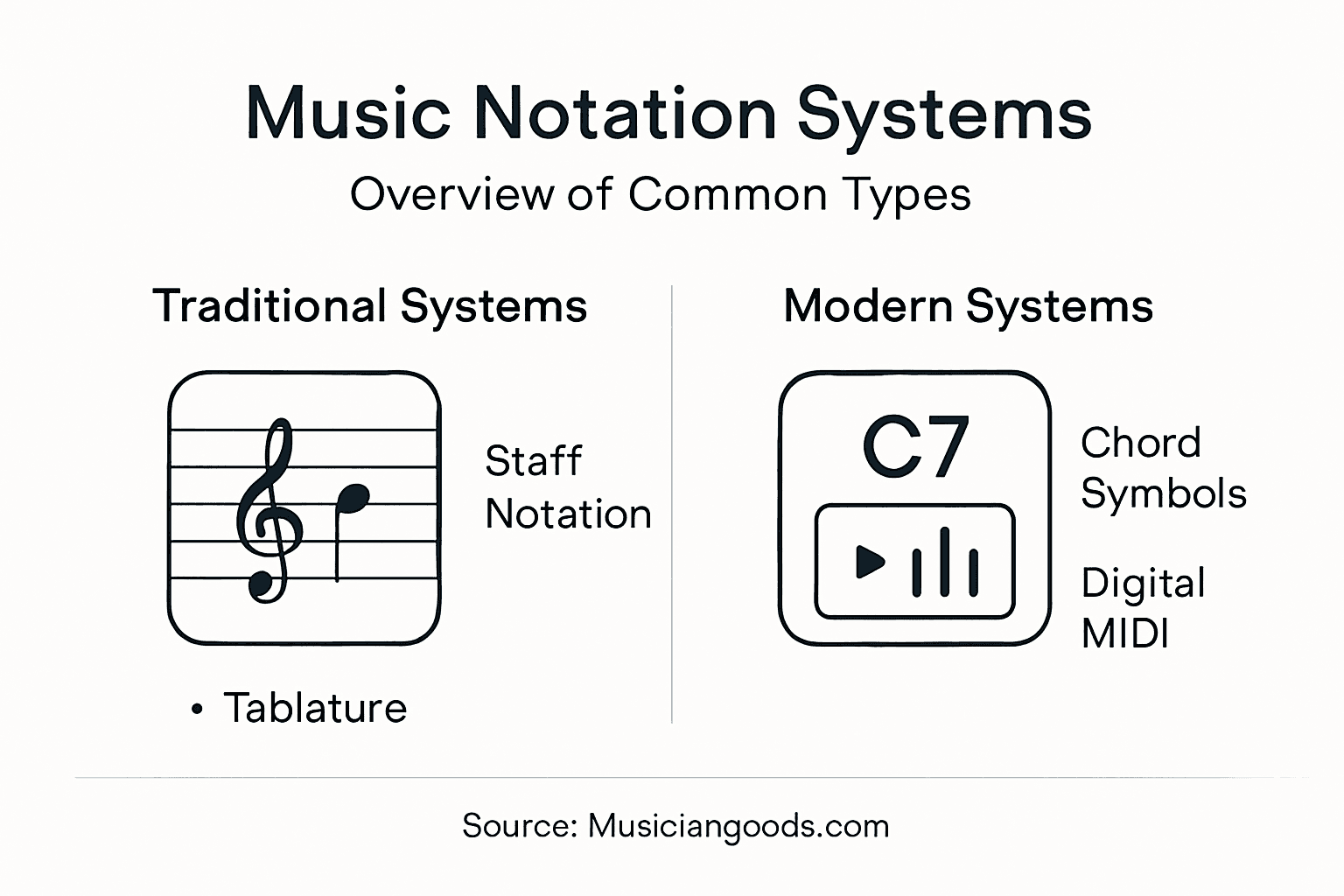
Here’s a comparison of common music notation systems and their ideal use cases:
| Notation System | Main Application | Best For |
|---|---|---|
| Western Standard Notation | Classical, Jazz, Band Music | Conveying pitch and rhythm precisely |
| Tablature (TAB) | Guitar, Bass, Fretted Instruments | Visualizing instrument fingerings |
| Graphic Notation | Experimental, Avant-Garde Music | Creative and interpretive scores |
| Numbered Notation | Asian Music Traditions | Simplified melodies and harmonies |
Pro tip: Practice reading multiple notation systems to expand your musical versatility and communication skills.
How to Read Basic Music Notation Symbols
Music notation symbols are the alphabet of musical communication, translating sound into visual language. Reading music fundamentals requires understanding several key components that represent pitch, rhythm, and musical expression.
The essential symbols musicians need to master include:
- Note Heads: Indicate specific pitch and rhythmic duration
- Clefs: Define the pitch range on the musical staff
- Time Signatures: Show rhythmic structure and beat counting
- Rests: Represent periods of musical silence
Reading pitch starts with understanding the musical staff. The five horizontal lines and four spaces represent different notes, with the vertical position of a note head determining its specific pitch. Treble clef (used for higher-pitched instruments) and bass clef (for lower-pitched instruments) provide the initial framework for identifying note locations.

Rhythmic notation is equally crucial. Note values communicate how long a sound should be played, with different shapes representing different durations. Whole notes, half notes, quarter notes, and eighth notes each have distinct visual representations that tell musicians exactly how long to sustain a sound.
Musicians must also learn additional symbols that provide musical context and expression. Dynamics markings like forte (loud) and piano (soft), articulation marks, and tempo indicators transform basic notation into a comprehensive musical instruction set.
For a quick reference, here’s how basic music notation symbols function:
| Symbol | Primary Purpose | Aids Musicians By |
|---|---|---|
| Clef | Defines staff’s pitch range | Identifying instrument parts |
| Note Head | Shows pitch and duration | Indicating what and when to play |
| Rest | Represents silence | Marking pause timing |
| Time Signature | Sets beats per measure | Structuring rhythm and count |
Pro tip: Practice reading notation by playing simple melodies while watching the corresponding sheet music, gradually training your eyes to connect visual symbols with musical sounds.
Why Music Notation Skills Boost Practice
Fundamental music theory skills dramatically improve a musician’s ability to learn, practice, and perform music with precision and confidence. Notation skills transform musicians from passive listeners to active interpreters of musical language.
The key benefits of developing strong notation skills include:
- Faster Learning: Quickly understand new musical pieces without relying on audio recordings
- Improved Communication: Share musical ideas with other musicians using a universal language
- Independent Practice: Study and rehearse music without constant external guidance
- Enhanced Musical Understanding: Analyze musical structures and compositional techniques
Notation literacy enables musicians to break down complex musical compositions into manageable components. By reading sheet music, guitarists and bassists can understand exactly how a piece is constructed, including precise rhythmic patterns, harmonic structures, and dynamic variations.
Professional musicians rely on notation skills to collaborate efficiently. A drummer in New York can receive a written score from a composer in Los Angeles and immediately understand the exact musical requirements, without hearing a single note. This universal communication system transcends language and geographical barriers.
Moreover, notation skills develop critical cognitive abilities. Reading music challenges the brain to simultaneously process visual symbols, translate them into sound, and maintain rhythmic and melodic understanding. This mental workout improves overall musical comprehension and performance skills.
Pro tip: Dedicate 15 minutes daily to reading and decoding sheet music, gradually increasing complexity to build your notation fluency.
Common Mistakes When Learning Notation
Music theory learning challenges reveal that beginners often struggle with understanding the complex language of musical notation. These common mistakes can significantly hinder a musician’s progress and create frustrating roadblocks in skill development.
The most frequent errors musicians make when learning notation include:
- Rushing Through Fundamentals: Skipping basic rhythm and pitch understanding
- Inconsistent Practice: Failing to sight-read music regularly
- Ignoring Expressive Markings: Overlooking dynamic and interpretive symbols
- Fear of Complexity: Becoming overwhelmed by seemingly complicated notation systems
Rhythmic misunderstandings are particularly challenging for new musicians. Many students struggle to accurately interpret note values, confusing quarter notes, half notes, and whole notes. This confusion can lead to significant timing errors when performing music, creating a disconnect between what’s written and how the music should sound.
Key signature and accidental comprehension represents another major stumbling block. Musicians often misread or misinterpret the sharp, flat, and natural symbols that modify note pitches. These small symbols dramatically change how notes are played, and misunderstanding them can lead to entire passages being performed incorrectly.
Psychological barriers also play a significant role in notation learning. Many musicians develop anxiety around sheet music, viewing it as an intimidating wall of complex symbols rather than a helpful communication tool. This mental block can prevent students from developing the confidence needed to become proficient readers of musical notation.
Pro tip: Break down notation learning into small, manageable daily challenges, focusing on one symbol or concept at a time to build confidence and understanding.
Master Music Notation with Tools Designed for Your Success
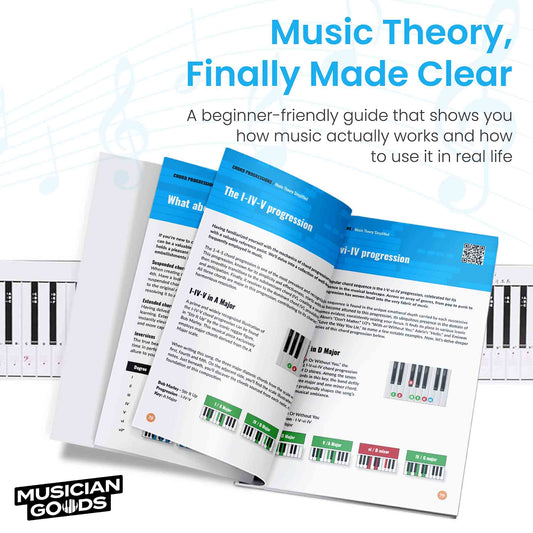
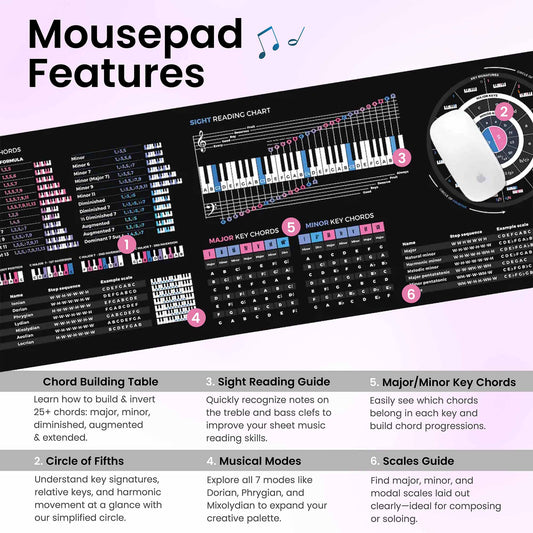
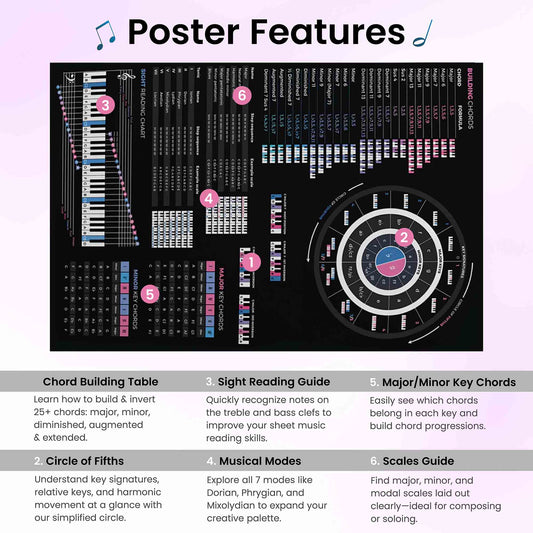
Understanding music notation is essential but can be overwhelming. Whether you’re struggling with reading rhythmic patterns or deciphering clefs and dynamic markings, the challenges highlighted in the article reveal a common need for accessible, step-by-step learning resources. At Musiciangoods, we recognize these pain points and offer practical educational tools and cheat sheets specially created to simplify these key concepts like pitch, rhythm, and notation symbols.

Unlock your musical potential today with Musiciangoods. Our trusted platform provides books and visual aids tailored for all skill levels so you can confidently practice sight-reading, deepen your music theory knowledge, and overcome notation challenges fast. Start your journey toward fluent music notation by exploring our comprehensive resources now and experience the difference clear, well-structured learning makes.
Frequently Asked Questions
What is music notation and why is it important?
Music notation is a system of symbols that allows musicians to communicate musical ideas through written form. It is important because it provides a universal language for musicians, enabling them to read, study, and perform music accurately across different cultures and instruments.
What are the main elements represented in music notation?
The main elements represented in music notation include pitch (the specific note being played), duration (how long a note is held), and rhythm (the timing and pattern of musical sounds). These elements help musicians understand how to recreate a piece of music.
How can I improve my music notation reading skills?
To improve your music notation reading skills, practice sight-reading daily. Start with simple melodies and gradually increase complexity. Focus on understanding basic rhythms, note placements on the staff, and expressive markings to build your overall musical comprehension.
What are the different types of music notation systems?
There are several types of music notation systems including Western Standard Notation, which uses a five-line staff; Tablature (TAB) for guitar and bass; Graphic Notation for experimental music; and Numbered Musical Notation popular in some Asian music traditions. Each system serves specific purposes in conveying musical ideas.