4.8/5 on Trustpilot

Many musicians struggle to connect abstract music theory concepts with actual playing. You might understand intervals and triads on paper but feel lost when it’s time to apply them on your instrument. Chord diagrams bridge this gap by transforming complex harmonic ideas into clear visual patterns you can see, touch, and immediately use. This guide reveals how chord diagrams accelerate your theory mastery and unlock practical skills that improve everything from sight reading to improvisation.
Key takeaways
| Point | Details |
|---|---|
| Learning acceleration | Visual chord diagrams help you recognize and memorize chords 30-40% faster than traditional methods alone. |
| Technical development | Diagrams build muscle memory, pattern recognition, and hand coordination across all chordal instruments. |
| Creative freedom | They provide flexible frameworks for experimenting with voicings, rhythms, and harmonic variations. |
| Cross-instrument utility | Chord diagrams translate easily between guitar, piano, and other instruments, improving transposition skills. |
| Theory complement | Diagrams enhance but don’t replace foundational music theory understanding for complete musicianship. |
How chord diagrams enhance understanding and retention of music theory
Chord diagrams use simplified chord symbols that make notation more accessible than traditional sheet music. Instead of reading multiple staff lines, you see exactly where your fingers go. This directness helps your brain connect theory with action.
Chord charts facilitate practical application of music theory concepts, enhancing understanding and retention significantly. When you practice with diagrams, you’re not just memorizing shapes but internalizing how chords function within progressions. You start recognizing inversions, voice leading patterns, and harmonic relationships naturally.
Active application beats passive memorization every time. Chord diagrams push you to experiment and apply theory immediately rather than simply reading about it. This hands-on approach builds confidence and independence as you explore different voicings and progressions on your own.
Using chord charts unlocks faster music learning by encouraging self-directed discovery. You can test theoretical concepts in real time, hearing how different chord qualities and extensions change the emotional color of your music.
Key benefits for theory retention include:
- Visual reinforcement of interval relationships within chords
- Immediate feedback when practicing chord progressions
- Easier identification of chord families and patterns
- Clear representation of chord qualities (major, minor, diminished, augmented)
- Simplified understanding of chord extensions and alterations
Pro Tip: Always combine chord diagrams with theoretical study for best results. Understanding why a chord functions certain ways in progressions deepens your musical intuition beyond just knowing where to place your fingers.
Boosting technical skills and finger coordination with chord diagrams
Recognizing chord shapes and finger patterns rapidly transforms your playing efficiency. Chord diagrams train your eyes and hands to work together, building neural pathways that make complex transitions feel automatic over time.

Chord charts promote technical development by encouraging pattern recognition and hand coordination development. When you practice the same chord in different positions using diagrams, your fingers learn optimal movement paths. This muscle memory carries over into varied musical contexts, from jazz standards to pop songs.
Regular diagram practice builds dexterity and finger agility across instruments. Guitarists develop cleaner fret transitions and better stretching ability. Pianists improve hand independence and voicing control. The visual feedback helps you correct awkward fingerings before they become habits.
Improving technique with chord charts leads to measurable performance gains. You’ll notice faster chord changes, reduced hand tension, and greater comfort with extended harmonies.
Technical benefits include:
- Faster chord transitions between different voicings
- Less hand fatigue through optimized finger placement
- Adaptability to multiple musical styles and genres
- Improved finger independence for complex voicings
- Better hand positioning and ergonomic awareness
Pro Tip: Use chord diagrams in daily warm-ups to enhance coordination systematically. Start with basic triads, then progress to seventh chords and extensions. This structured approach builds technical foundation while expanding your harmonic vocabulary simultaneously.
Unlocking creativity and improvisation through chord diagrams
Chord diagrams outline basic structure but leave room for personal interpretation. You see the essential notes but decide how to voice them, which rhythm to use, and how to embellish the harmony. This balance between guidance and freedom sparks creativity.
Chord charts serve as gateways to improvisation by providing frameworks for experimentation and creative expression. Once you know a chord’s core structure from the diagram, you can break it apart, arpeggiate it, or add color tones. You’re not locked into one exact voicing.
Experimenting with broken chords and rhythmic patterns becomes intuitive with diagram references. You might play a C major triad as a rolling arpeggio, a syncopated rhythm, or sustained block voicing depending on the musical moment. The diagram shows the ingredients while you create the recipe.
Visual frameworks build confidence to try new ideas without fear. When you see chord relationships mapped out clearly, exploring substitutions and reharmonizations feels less risky. You understand what notes are safe and which ones create interesting tension.
Improvisation skills improve as you grasp chord construction and voice leading through repeated diagram use. You start hearing harmonic possibilities before playing them because the visual patterns become internalized.
Ways to experiment using chord diagrams in improvisation include:
- Altering chord tones by raising or lowering fifths and ninths
- Adding extensions like 9ths, 11ths, and 13ths to basic triads
- Varying dynamics from soft whispers to powerful accents
- Exploring different voicing ranges from bass-heavy to treble-focused
- Substituting related chords within the same harmonic function
How chord diagrams speed up learning and cross-instrument application
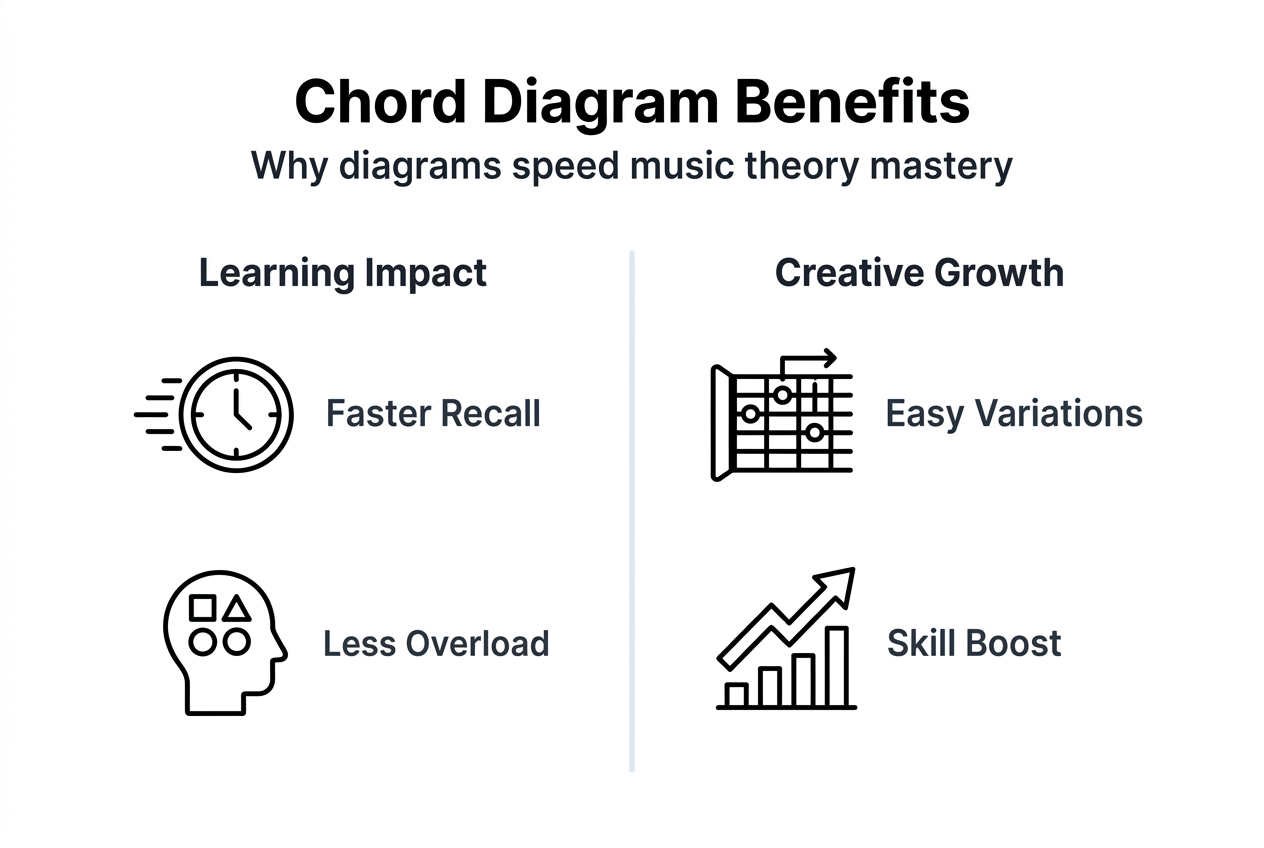
Research demonstrates that visual chord diagrams enable 30-40% faster learning curves for beginners compared to notation-only approaches. Your brain processes visual spatial information more quickly than abstract symbols, making chord recognition almost immediate once patterns become familiar.
Chord diagrams facilitate rapid visual understanding of chord structures and improve transposition skills significantly. When you see how a C major chord maps onto your instrument, transposing it to G major becomes a simple pattern shift rather than recalculating each note.
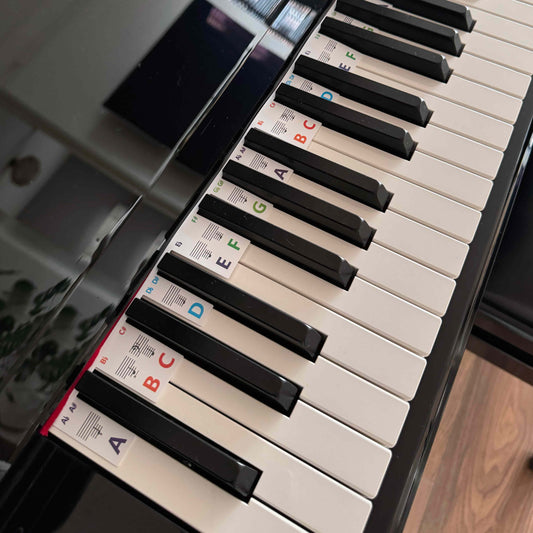
They work equally well for guitar, piano, and other chordal instruments. Guitarists see fretboard positions while pianists view keyboard layouts, but the underlying principle remains the same: visual representation of harmonic structure. This universality helps multi-instrumentalists transfer knowledge quickly.
| Learning Metric | Without Diagrams | With Diagrams | Improvement |
|---|---|---|---|
| Chord memorization speed | 8-10 weeks | 5-6 weeks | 35% faster |
| Pattern recognition accuracy | 65-70% | 90-95% | 30% increase |
| Transposition success rate | 55-60% | 85-90% | 45% boost |
| Chord vocabulary size (6 months) | 25-30 chords | 50-60 chords | 100% expansion |
Using chord diagrams across instruments enables quicker adaptation to different musical keys and contexts. You develop mental flexibility that serves you in jam sessions, recording sessions, and live performance situations where key changes happen spontaneously.
The visual approach reduces cognitive load during learning. Instead of decoding staff notation while simultaneously figuring out fingering, you see both elements integrated into one clear diagram. This efficiency frees mental energy for musical expression and interpretation.
The role of chord spacing and voicing insights from chord diagrams
Chord diagrams visually represent finger placement and can guide optimal bass-to-upper note spacing. Proper spacing isn’t just aesthetic, it’s based on acoustic science and how harmonics interact in physical space.
Spacing chords so bass notes stand apart from upper notes creates more rewarding and musical sounds. This principle follows the overtone series, where lower frequencies need more room to resonate without creating muddy harmonics. Diagrams help you visualize this spacing automatically.
Classical composers like Bach and Beethoven consistently demonstrate these spacing practices for maximum resonance. When you study their chord voicings through diagrams, patterns emerge: wider intervals in the bass, closer intervals in upper voices, strategic doubling of certain tones.
| Voicing Type | Note Distribution | Sonic Effect | Best Use Cases |
|---|---|---|---|
| Clustered voicing | All notes within one octave | Dense, intense, modern | Jazz comping, contemporary styles |
| Spaced voicing | Bass note separate, upper notes grouped | Clear, resonant, traditional | Classical, hymns, ballads |
| Open voicing | Wide intervals throughout | Airy, expansive, ambient | Film scores, atmospheric music |
| Drop-2 voicing | Second-highest note dropped octave | Balanced, smooth, professional | Jazz, R&B, sophisticated pop |
Understanding spacing helps you create breathing chords that enhance expression. When chords have proper space, each note’s character shines through. Listeners perceive clearer harmonic motion and emotional nuance.
Chord diagrams make these voicing principles accessible to everyone, not just advanced players. You start noticing how professional recordings use spacing to create depth and dimension. Then you apply these insights to your own playing, elevating your sound quality immediately.
Explore music theory tools and resources to master chord diagrams
Ready to accelerate your chord diagram mastery? Specialized tools, cheat sheets, and educational books simplify learning and application dramatically. These resources condense years of theory knowledge into accessible visual formats you can reference anytime.

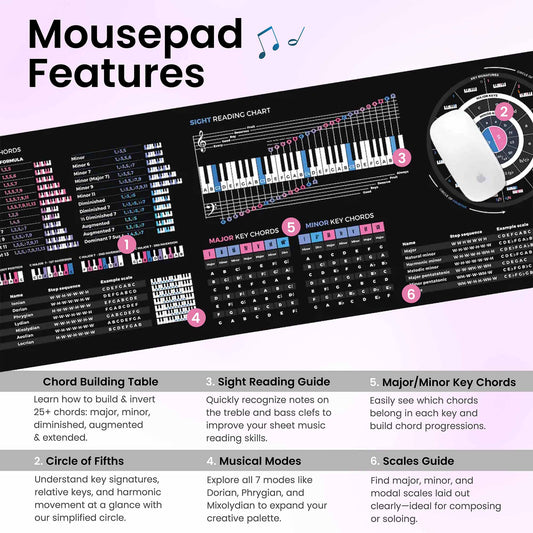
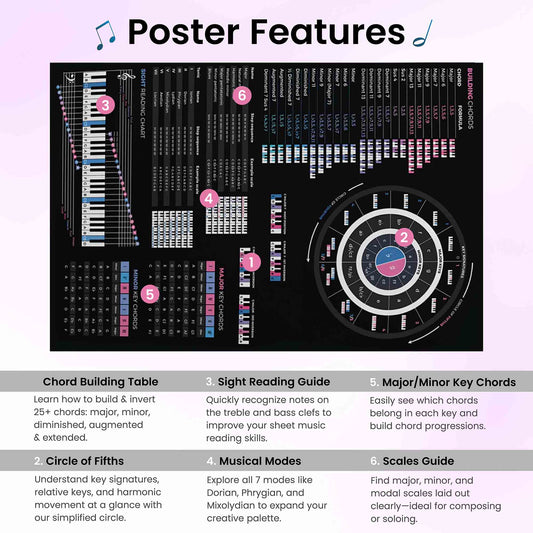
Music theory tools and cheat sheets created by musicians for musicians offer quick references for common chords, progressions, and voicing options. Having a physical chart near your practice space eliminates the need to search online mid-session. You stay in the creative flow.
Books deepen theory understanding while providing practical exercises that build real skills. They connect chord diagrams to broader harmonic concepts, helping you understand not just how but why certain voicings work. This comprehensive approach develops complete musicianship.
Our chord charts learning guide breaks down step-by-step systems for integrating diagrams into daily practice. You’ll discover structured approaches that beginners and experienced players alike find valuable.
Available resources include:
- Printable chord diagram charts for all common keys
- Interactive apps with audio playback for ear training
- Tutorial videos demonstrating proper voicing techniques
- Theory workbooks with diagram-based exercises
Pro Tip: Regular practice with these resources accelerates mastery and confidence exponentially. Dedicate just 10-15 minutes daily to diagram study and application, and you’ll notice remarkable progress within weeks.
Frequently asked questions
What are chord diagrams?
Chord diagrams are visual representations showing finger placement for chords on instruments like guitar and piano. They display which strings, frets, or keys to press, making chord learning intuitive and immediate. Unlike traditional notation, diagrams show spatial relationships your hands need to form.
Are chord diagrams only for beginners?
No, chord diagrams benefit all skill levels by improving speed, efficiency, and creative exploration. Advanced players use them to learn complex jazz voicings, explore alternate fingerings, and quickly reference unfamiliar chord extensions. They’re tools for continuous growth, not just starting points.
Can chord diagrams replace music theory?
Chord diagrams complement music theory but don’t replace fundamental knowledge of intervals, scales, and harmonic function. They make theory practical and visual, but understanding why chords work together requires studying relationships between notes. Use diagrams to apply theory, not avoid it.
How do chord diagrams help improvisation?
They provide frameworks for exploring chord variations, voicings, and substitutions during improvisation. Once you internalize basic shapes from diagrams, you can alter tones, add extensions, and create harmonic interest spontaneously. The visual foundation gives you confidence to experiment without getting lost.
Why use chord diagrams instead of just sheet music?
Diagrams simplify and speed up learning by showing exactly where fingers go without decoding staff notation. They reduce cognitive load during practice, letting you focus on sound and musicality rather than reading mechanics. For practical application and quick reference, diagrams are unmatched in efficiency.