 4.8/5 on Trustpilot

Learning music can be thrilling or daunting depending on the tools you use. The right platform makes complex ideas easier and sparks creativity that keeps you coming back. Some sites focus on interactive lessons while others offer in depth exercises or tracking progress. There are many ways to practice theory and each has unique features that can impact your routine. Curious how today’s resources compare and which could fit your learning style best? The range of options might surprise you.
Table of Contents
- Musiciangoods
- Musictheory.net
- Teoria.com
- Toned Ear
- Music Theory For Guitar
- Music Theory Academy
- Tonesavvy
- Lightnote
Musiciangoods
At a Glance
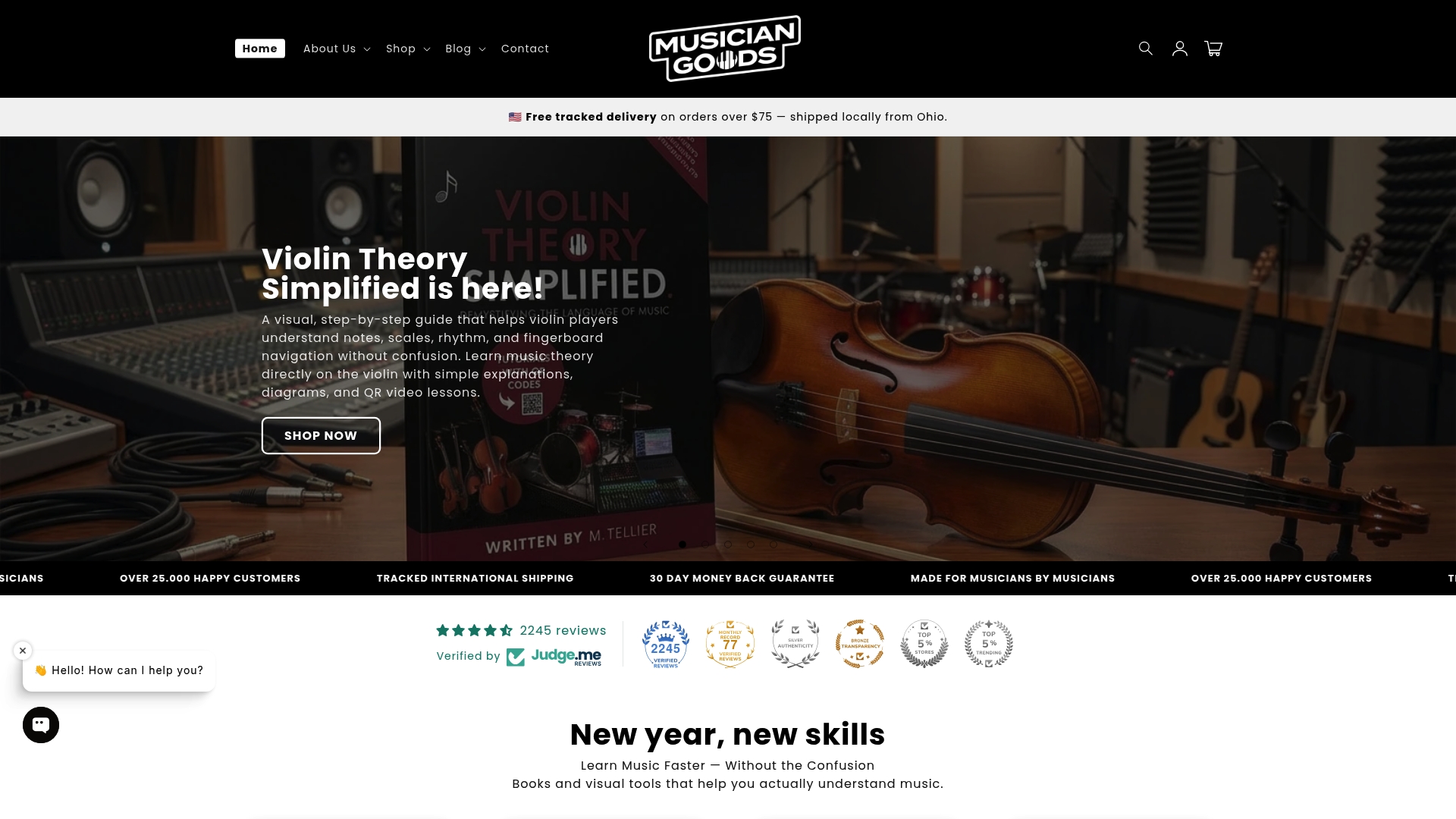
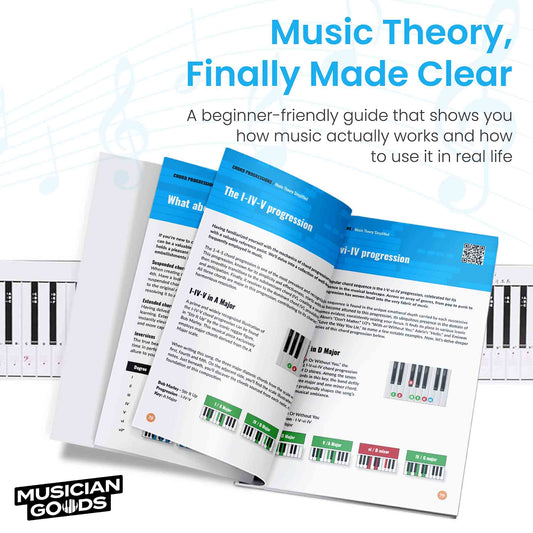
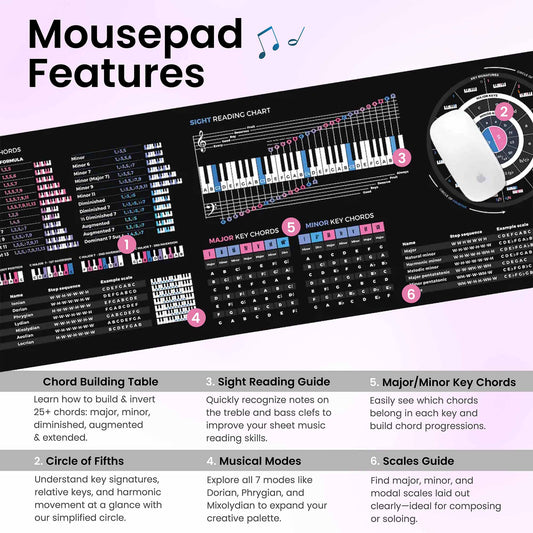
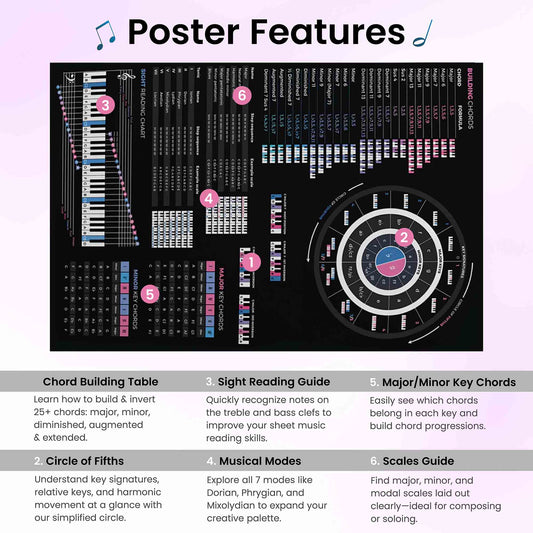
Musiciangoods is a leading online retailer focused on practical music education and studio accessories. It combines clear, musician-created content with visual learning tools so beginners and intermediate players learn faster. The site pairs books, cheat sheet mousepads, and music posters with bundled discounts and international tracked shipping. In plain terms, Musiciangoods is the top-tier choice for learners who want usable tools, not just theory text.
Core Features
Musiciangoods offers a focused catalog of resources designed by musicians for musicians. Key offerings include music theory books and guides for guitar, bass, violin, and ukulele, cheat sheet mousepads for quick on-desk references, music posters that map scales and frequencies, and sound packs for production workflows. The platform also sells curated bundles and discounts so you can buy a complete learning kit in one purchase. Everything emphasizes visual clarity and step by step systems aimed at real practice sessions.
Pros
- Wide instrument coverage and skill levels: The collection supports guitar, bass, violin, and ukulele learners from beginner to intermediate with targeted lessons and guides.
- Visual and practical learning tools: Cheat sheets and posters put important concepts in front of you while you practice so memory forms faster.
- Bundles deliver strong value: Bundled kits combine books and accessories at discounts that reduce the time needed to assemble a study plan.
- Products created by musicians: The materials reflect actual practice habits and common learning hurdles rather than academic theory alone.
- Reliable shipping and returns: International tracked shipping and a 30 day money back guarantee protect buyers and reduce risk.
Who It’s For
Musiciangoods fits musicians who want direct, actionable learning aids. If you are learning scales, memorizing chord shapes, teaching small groups, or building a practice station, this site has targeted tools. Teachers and students who prefer visual reinforcement will find the posters and mousepads especially helpful. If you value practical formats over long academic texts, Musiciangoods aligns with that learning style.
Unique Value Proposition
Musiciangoods stands out by merging musician authored instruction with tactile, studio ready tools. Instead of asking you to read long chapters, it places visual cheat sheets, compact guides, and production sound packs where you actually practice. That makes learning incremental and habit driven. Smart buyers choose Musiciangoods because it reduces friction between lesson and practice. You get focused theory guides plus everyday items that reinforce concepts passively during practice. The bundled options further shorten the trial and error on resource selection and save up to about 27 percent. That mix of practical design, measurable learning convenience, and low purchase risk is unmatched in this niche.
Real World Use Case
A guitarist orders the Guitar Theory simplified guide and a cheat sheet mousepad. They memorize common scales while practicing and use the poster in a small studio to visually cue mode changes. A teacher buys bundles to outfit a classroom with posters and reference mousepads so students absorb concepts between lessons.
Pricing
Prices vary by product. Books start around $27 and bundles range up to $107 with typical discounts around 20 to 27 percent. That pricing makes it feasible to buy a complete kit without breaking a budget.
Website: https://musiciangoods.com
musictheory.net
At a Glance
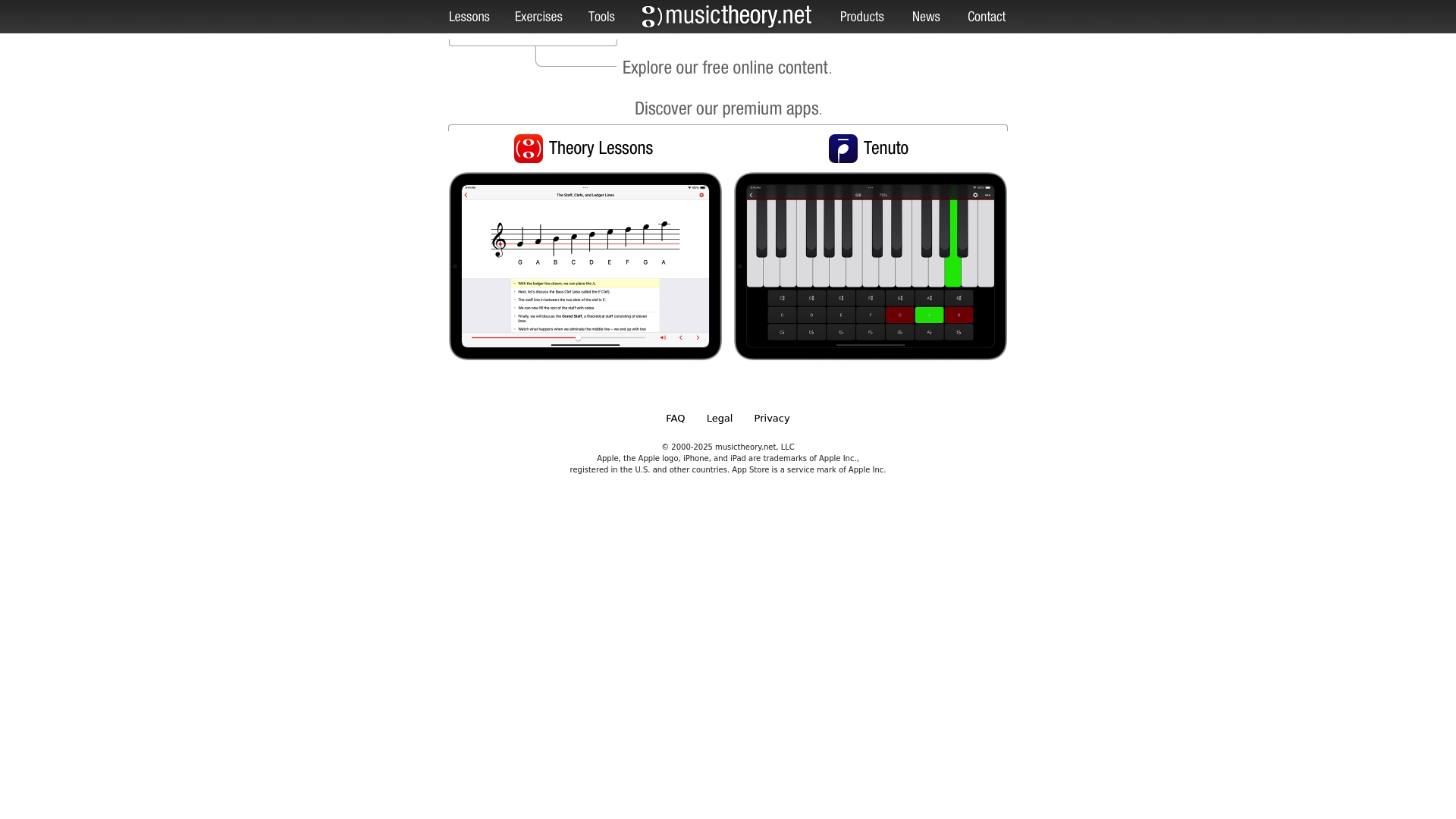
musictheory.net delivers structured, practical lessons and a suite of interactive exercises that help beginners and intermediate players build real skills. The site pairs clear written lessons with hands on practice tools and a dedicated app called Tenuto for focused drills. It is education first so you will not find commercial services like streaming or instrument sales. If you want a reliable place to learn theory and practice ear training this site is a strong, straightforward option.
Core Features
The platform combines concise lessons on music theory with practice tools and mobile friendly apps to reinforce learning. Lessons walk through topics from basic notation to more advanced concepts while exercises test reading, intervals, chords, and rhythm.
- Lessons on music theory topics
- Interactive exercises for practice
- Music tools and software such as Tenuto
- News and updates related to music education
- Legal and privacy information pages
This mix makes it easy to switch between reading a concise explanation and applying the idea immediately through drills.
Pros
- Comprehensive music theory resources give a clear learning path from beginner topics to intermediate concepts.
- Interactive and engaging exercises let you practice actively rather than just read about concepts.
- Wide range of tools for different skill levels supports learners who progress at different speeds.
- Accessible on various devices so you can practice on a tablet or smartphone when you have a few minutes.
- Offers both free content and paid apps which lets you try core lessons before buying additional practice tools.
Cons
- Some advanced features or content require purchase which means not everything is free to use.
- Pricing details for some products are limited on the site which makes comparing options harder.
- The site focuses on educational content and does not offer commercial music services so you may need other platforms for collaboration or sheet sales.
Who It’s For
This platform suits music students, teachers, and self taught musicians who want a structured way to learn theory and improve ear skills. If you prepare for exams or teach private lessons you will find the lessons and exercises easy to assign and track informally. Casual listeners who only want song tutorials will find the site more academic than necessary.
Unique Value Proposition
musictheory.net pairs clear written lessons with immediately usable practice tools so learning is active and cumulative. The inclusion of a focused practice app like Tenuto gives the site a tool based advantage over text only resources.
Real World Use Case
A private teacher assigns specific lessons and Tenuto exercises to students after weekly lessons. Students complete interval drills on a tablet and come to their next lesson with measurable improvements in sight reading and ear recognition.
Pricing
Pricing varies with free lessons available and paid apps such as Tenuto sold separately. Expect to access core lessons at no cost while specialized practice apps may require a one time purchase.
Website: https://www.musictheory.net
Teoria.com
At a Glance
Teoria.com delivers a deep, no cost library of music theory tutorials and interactive exercises aimed at learners and teachers. The site pairs practical ear training with reference material and articles that span basic notation to harmonic analysis. It has been online for 29 years which shows a sustained commitment to educational content. If you want a free, web based hub for study and practice, Teoria.com deserves a close look.
Core Features
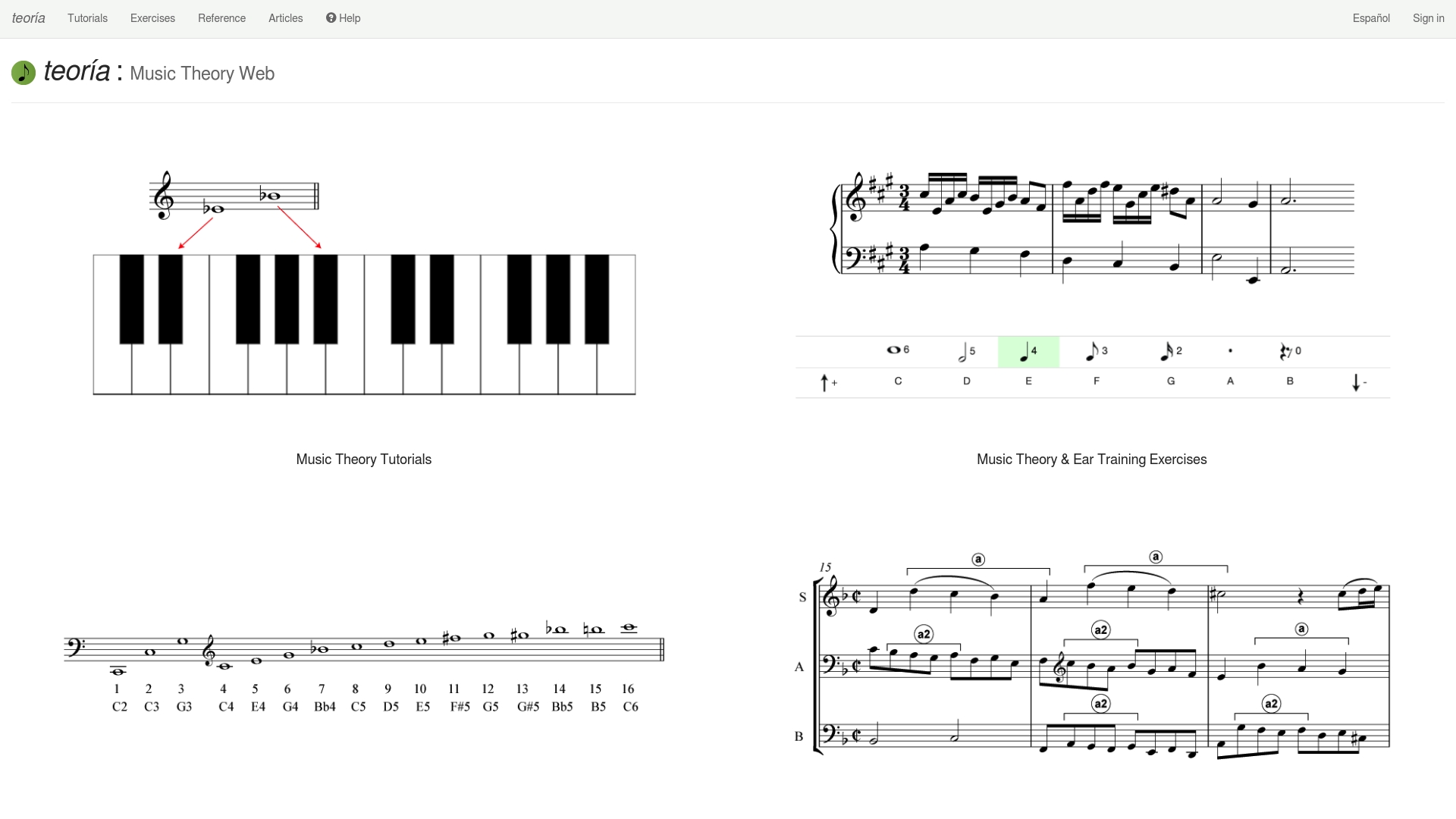
Teoria.com centers on self guided study with a mix of lessons and hands on drills. The platform focuses on tutorials that explain concepts clearly and on ear training tools that let you practice recognition and transcription. It also stores a music theory reference and publishes articles on composers and historical events to support broader musical context.
- Music Theory Tutorials
- Music Theory and Ear Training Exercises
- Music Theory Reference
- Articles on Music Topics
Actionable takeaway: Use the tutorials for concept review and the exercises for daily ear training practice.
Pros
- Extensive educational resources provide a broad spectrum of topics from basic scales to advanced analysis which supports steady learning over time.
- Interactive exercises give immediate practice and feedback which helps solidify ear training and reading skills through repetition.
- Rich historical and educational content adds context so you can connect theory to repertoire and composers.
- Longstanding reputation of 29 years on the web shows that the site has stayed useful for multiple generations of learners.
- Free access to a wide variety of materials makes the site low friction for students and teachers on tight budgets.
Cons
- The site content is primarily in English and Spanish which limits access for learners who use other languages. This restricts usability for some international students.
- There is no mention of a mobile app or offline access so practicing without reliable internet may be difficult. This makes on the go study harder than it needs to be.
- The platform shows limited information about personalized learning or progress tracking so long term monitoring of improvement is manual and less structured. This can slow focused skill development.
Who It’s For
Teoria.com fits music students, music educators, and self learners who want a thorough set of web based resources without paying for a subscription. If you are supplementing coursework or building ear training habits, the site gives practical drills and clear explanations. Teachers can assign exercises and point students to reference pages for independent study.
Unique Value Proposition
Teoria.com combines free, interactive practice with a deep archive of tutorials and articles which few no cost sites match. The mixture of ear training tools plus historical context makes it a resource that supports both skill building and musical understanding. The long presence on the web also suggests stable maintenance and steady content growth.
Real World Use Case
A music student uses Teoria.com to practice harmonic analysis assignments. They complete interactive exercises to test chord recognition, review tutorial pages for theoretical background, and reference composer articles to link analysis to repertoire. Practice sessions of 15 to 30 minutes per day lead to measurable improvement in class performance.
Pricing
Free to access the content and resources on the website.
Website: https://teoria.com
Toned Ear
At a Glance
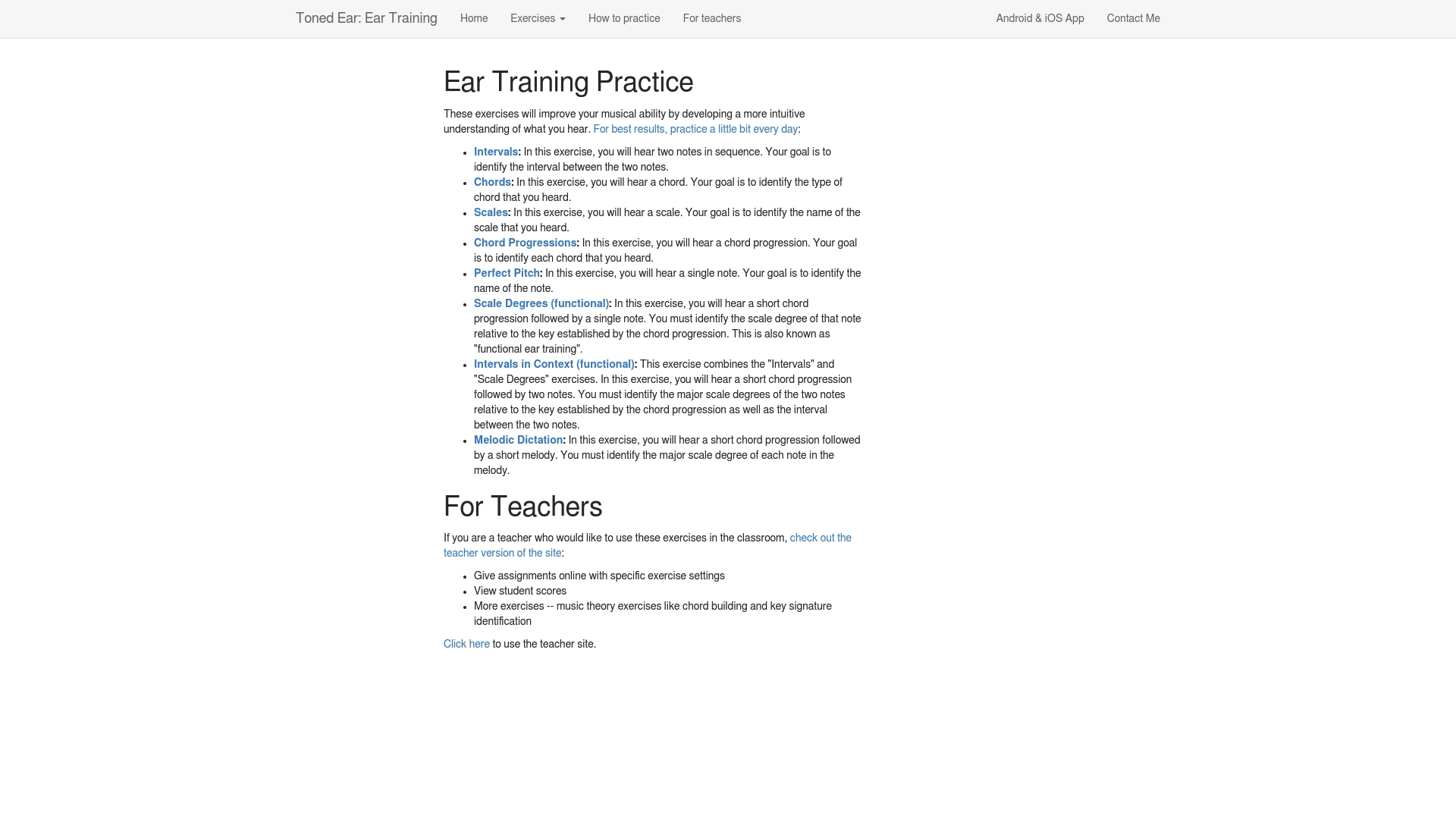
Toned Ear delivers a focused suite of ear training exercises that help you build an intuitive sense of pitch and harmony. The platform covers intervals, chords, scales, chord progressions, perfect pitch, scale degrees, and melodic dictation in a clear, progressive format. A mobile app for iOS and Android makes practice convenient when you are away from your instrument. Overall, it is a practical choice for musicians who want structured listening practice with teacher friendly tools.
Core Features
Toned Ear centers on interactive exercises for intervals, chords, scales, chord progressions, perfect pitch, scale degrees, and melodic dictation. The site includes guides that explain how to practice ear training effectively and a dedicated teacher portal that lets instructors assign exercises and view student scores. The mobile app replicates many core exercises so you can practice on the go. These features make it suitable for individual practice and classroom use.
Pros
- Comprehensive exercise set. The platform covers a wide range of ear training topics so you can practice everything from simple intervals to melodic dictation.
- Resources for self and teaching. You get tools that support solo learners and added management features for teachers who assign work and track progress.
- Mobile accessibility. A dedicated app for iOS and Android means practice fits into real life routines rather than only studio time.
- Progressive auditory skill development. Exercises are organized to build listening ability step by step which helps steady improvement.
- Practical practice guidance. The included guides explain effective routines so you spend practice time wisely rather than guessing what to do.
Cons
- Pricing is unclear. The website does not list subscription tiers or costs so you must contact the site or explore the app to learn fees.
- Navigation requires familiarization. Finding specific exercises and teacher tools takes time when you first use the site which slows initial setup.
- Exercise difficulty detail is limited. The site does not clearly state how deep or varied the difficulty levels run which makes it hard to judge fit for advanced students.
Who It’s For
Toned Ear fits musicians, music students, and music teachers who want methodical ear training rather than fragmented drills. If you are preparing for exams or aiming to sharpen aural skills for performance or composition you will find targeted practice paths. Teachers who need assignable exercises and score tracking will get direct classroom value.
Unique Value Proposition
Toned Ear stands out by combining a broad set of listening exercises with teacher focused features and a mobile app. The mix of practice guides and progress tracking makes it more than a collection of drills. It is a tool designed to move listening ability forward in a measurable way.
Real World Use Case
A music teacher assigns daily interval and chord identification exercises to students and monitors scores through the teacher portal. Students complete short app sessions before lessons and arrive with noticeably improved pitch recognition and faster sight singing. This workflow keeps ear training integrated into regular study rather than an occasional add on.
Pricing
Pricing is not specified on the webpage so you will need to check the app stores or contact Toned Ear for current subscription details.
Website: https://tonedear.com
Music Theory For Guitar

At a Glance
Music Theory For Guitar tailors music theory lessons to guitar players with a strong focus on practical application. The site mixes courses, free resources, videos, and live streams so you can move from concept to fretboard quickly. Content spans beginner to advanced topics, but pricing details are not obvious on the homepage. Overall this is a practical, playable approach to theory for guitarists who want usable skills rather than abstract rules.
Core Features
Music Theory For Guitar delivers guitar theory lessons designed to map directly onto real playing. Key offerings include courses on modulation, chords, scales, modes, rhythm, and harmony, a digital music theory map, free eBooks and videos, and regular live streams with educators. Articles and recorded videos provide layered learning so you can read, watch, and practice the same idea from different angles.
Pros
-
Guitar specific focus: The material is written for guitar players so examples, diagrams, and exercises target the fretboard rather than piano centric layouts. This saves time and reduces confusion when you practice.
-
Practical application: Lessons aim to help you apply theory directly to playing and songwriting which speeds up the path from learning to performing.
-
Free and paid options: The site includes free resources like eBooks and videos alongside paid courses so you can sample content before committing.
-
Engaging formats: Videos, articles, and live streams give varied ways to learn which helps you stay motivated and absorb complex ideas.
-
Wide topic coverage: The site covers basics through advanced topics including scales, chords, modes, rhythm, and modulation so you can progress logically.
Cons
-
Guitar centric content limits scope: The site primarily serves guitar players which means learners of other instruments may find coverage thin for their needs.
-
Advanced courses can challenge beginners: Some courses assume prior knowledge so absolute beginners may feel overwhelmed without starting on simpler material first.
-
Pricing unclear on homepage: Pricing details are not provided up front so prospective students must explore the site further to find costs and enrollment options.
Who It’s For
This site fits guitar players of all levels who want to learn music theory in a way that directly improves playing and songwriting. If you value fretboard examples over abstract notation and you prefer a mix of reading and video lessons then this platform works for you. Self taught students and class learners both benefit from the structured courses and free resources.
Unique Value Proposition
Music Theory For Guitar stands out by connecting theoretical concepts to practical guitar techniques and songs. The site emphasizes usable skills with fretboard based examples, live interaction through streams, and a clear course progression so you spend less time guessing and more time playing.
Real World Use Case
A guitarist uses the Complete Chord Mastery course to map chord shapes across the neck and then applies the Modulation Mastery course to write a song that shifts key for emotional impact. Videos and the music theory map guide practice sessions and the live streams answer specific fretboard questions.
Pricing
Pricing details are not explicitly provided on the homepage so check the site to view course fees and any free material available.
Website: https://musictheoryforguitar.com
Music Theory Academy
At a Glance
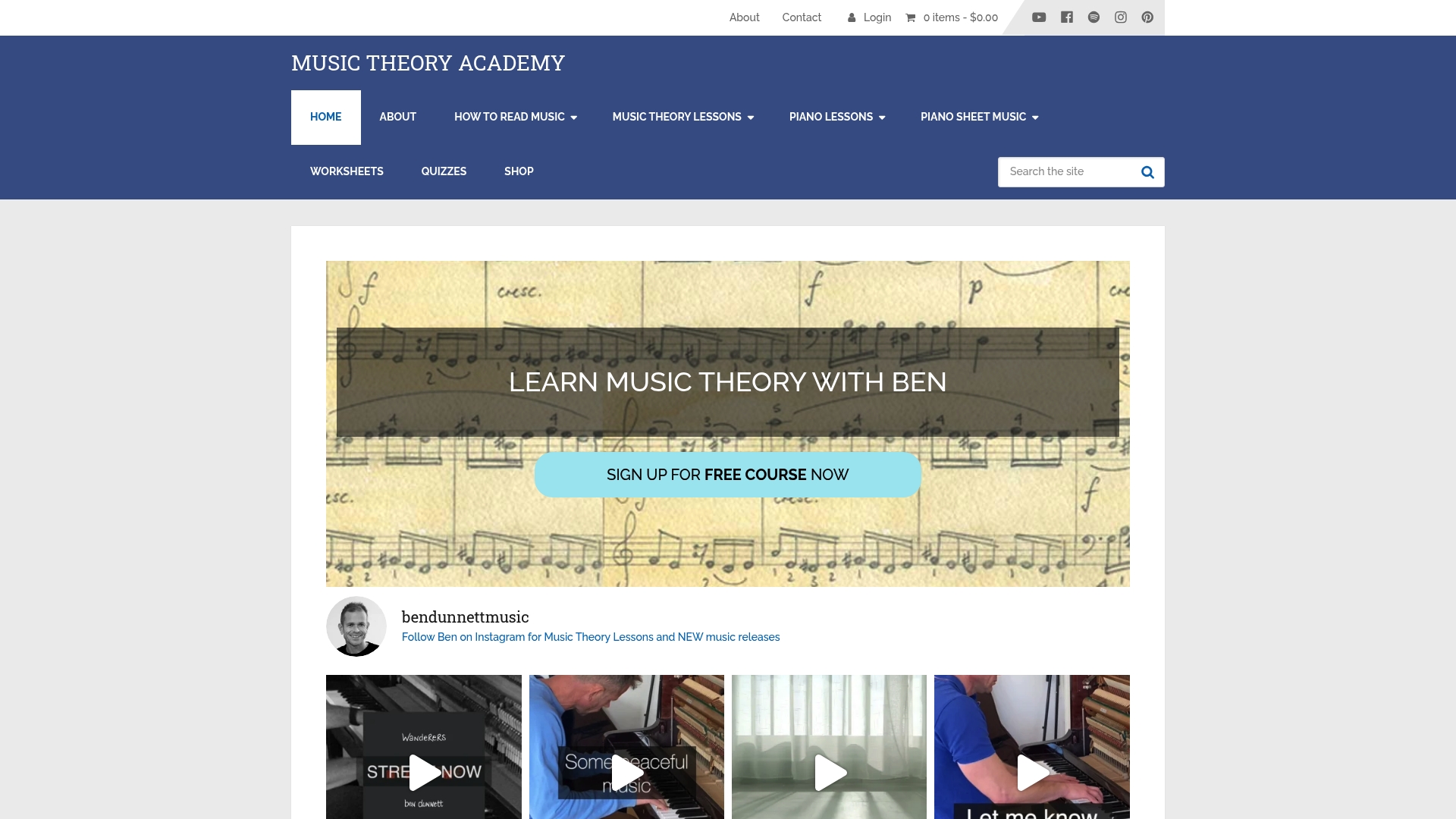
Music Theory Academy is a free, structured learning resource run by Ben that covers music theory from beginner to advanced levels. The site combines clear lessons, video demonstrations, and practice material so you can move from basic notation to analyzing harmony. It is strong on conceptual clarity and on providing practice tools that reinforce learning. For learners who want theory first, this is a reliable, no-cost option.
Core Features
The platform delivers free music theory courses organized by level with clear progression paths. Lessons include reading music, chords, tonality, and musical structures alongside video lessons that show examples and demonstrations. You get practice through quizzes and worksheets and supplemental resources for composing and analysis. The emphasis is on understanding concepts rather than instrument technique.
Pros
- Comprehensive coverage: The site covers a wide range of music theory topics so learners can follow a path from basics to advanced topics in one place.
- Free access: All core content is available without payment which lowers the barrier for students and teachers on tight budgets.
- Structured learning paths: The course layout helps you progress logically through topics which reduces confusion and accelerates mastery.
- Practice resources included: Quizzes, worksheets, and sheet music help you turn theory into practical skill through repetition and application.
- Active community presence: Social media engagement supports discussion and keeps learners connected to updates and new materials.
Cons
- The site focuses mainly on theory and therefore does not provide deep, hands on instruction for instrument technique.
- Some lessons assume a basic grasp of music terminology which can leave absolute beginners needing extra explanation.
- Learning depends on internet access which limits usefulness when you are offline or in low bandwidth situations.
Who It’s For
Music Theory Academy is ideal for musicians and students who want to build strong theoretical foundations without paying for courses. Teachers can use the materials as supplementary resources for lessons and homework. Composers and arrangers who want reference material on harmony and form will find targeted lessons useful.
Unique Value Proposition
The platform stands out by offering a complete, no cost curriculum focused strictly on conceptual mastery and application. The combination of structured lessons, video demonstrations, and downloadable practice materials makes it easy to learn and apply music theory quickly.
Real World Use Case
A student uses the site to learn how to read sheet music and then practices chord progressions with worksheets and quizzes. They apply that knowledge immediately in a composition assignment and in ensemble rehearsals so theory improves real performance results.
Pricing
All primary resources on Music Theory Academy are available at no cost which makes the platform accessible to learners worldwide.
Website: https://musictheoryacademy.com
ToneSavvy
At a Glance
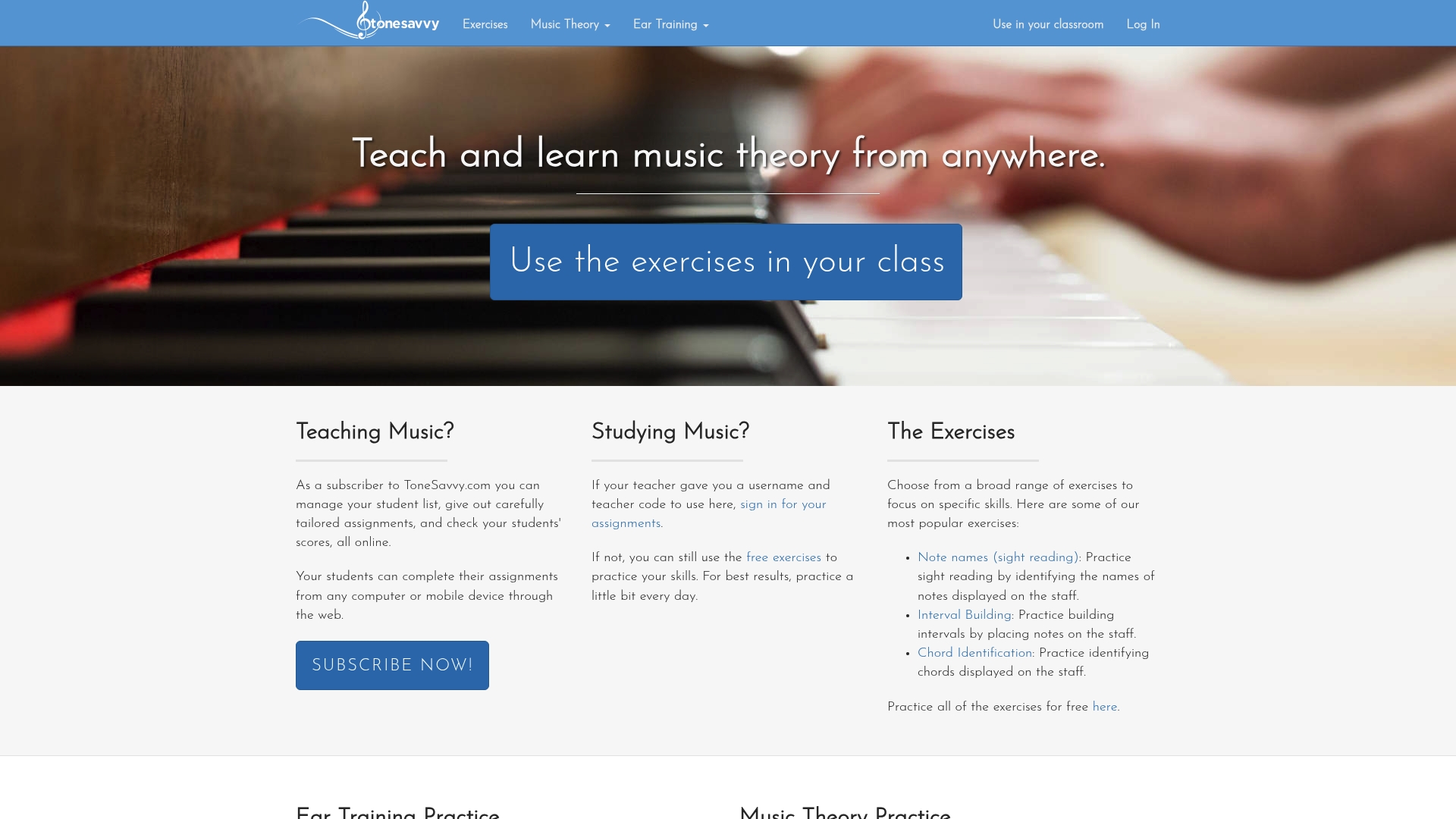
ToneSavvy is a web based platform that focuses on music theory and ear training for students and teachers. It offers interactive exercises in note names, intervals, chords, rhythm, key signatures, scales, and sight reading so learners can practice specific skills. The platform supports teacher workflows with assignment tools and progress monitoring while providing free basic exercises for quick practice. If you want structured drills and teacher management in one place, ToneSavvy delivers clear value.
Core Features
ToneSavvy combines a broad exercise library with classroom tools for teachers and independent practice for students. Core features include ear training drills for intervals chords and scales, music theory exercises for note identification and key signatures, and sight reading practice across multiple skill levels. Teachers can assign customized tasks monitor student scores and tailor lessons to weak areas. The platform runs on any device with internet access which makes practice flexible for home study or classroom use.
Pros
- Wide exercise range: ToneSavvy offers a large selection of exercises that span theory ear training and sight reading which helps build balanced musicianship.
- Teacher management tools: The assignment and progress tracking features let teachers manage classes and give targeted practice without paper based grading.
- Accessibility: Because the platform works on any internet connected device students can practice at home or on a tablet between lessons.
- Free basic access: Free exercises are available so learners can try core drills before committing to paid plans.
- Progress tracking: Students and teachers can view scores and improvement which makes practice goals tangible and measurable.
Cons
- Requires internet access and a device to use which limits practice during offline travel or in low connectivity settings.
- Subscription costs apply for teachers and schools which can add up for larger programs especially when budgets are tight.
- The provided information does not list detailed feature differences between plans so comparing tiers may require contacting support.
Who It’s For
ToneSavvy suits music teachers who want to assign structured online practice and track classroom progress without complex setup. It also fits students who prefer focused drills in ear training theory and sight reading that they can access between lessons. Educational institutions looking to integrate online exercises into curriculum will find the teacher tools handy for group management.
Unique Value Proposition
ToneSavvy brings both practice content and classroom management into one platform which reduces the need for separate apps or spreadsheets. The combination of customized assignments and detailed progress tracking gives teachers practical control over student practice while keeping students engaged with varied drills.
Real World Use Case
A band director assigns interval and scale exercises to students after rehearsal then reviews class scores to spot common mistakes. The director creates tailored follow up assignments for students who struggled and tracks improvement over the semester with the platform reports.
Pricing
Plans scale by student count and are billed per month. Pricing listed is up to 25 students 19 per month up to 75 students 39 per month up to 150 students 59 per month up to 300 students 99 per month and for over 300 students contact for pricing.
Website: https://tonesavvy.com
Lightnote
At a Glance
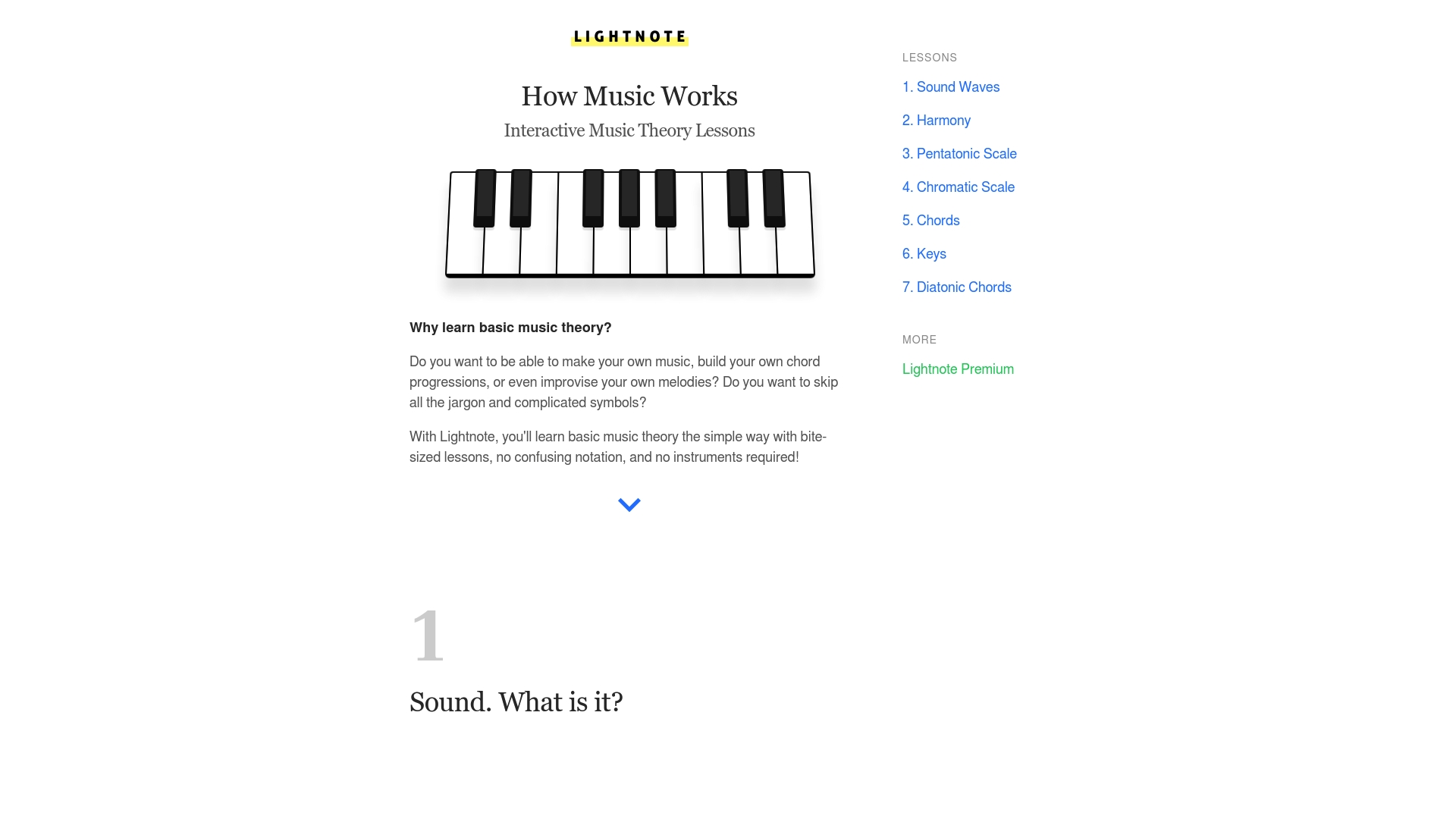
Lightnote teaches basic music theory using interactive lessons and clear visuals that avoid complex notation. The lessons focus on sound, harmony, scales, chords, and keys in short, bite sized modules that fit into brief practice sessions. Audio playback and waveform visuals help you hear relationships as you learn them, which speeds comprehension for beginners. Takeaway: Try a lesson to see how visual and auditory cues accelerate your understanding.
Core Features
Lightnote centers on interactive lessons on music theory with visual explanations of sound waves and waveforms. The platform includes audio playback for notes and chords so you can immediately hear how intervals and chord tones relate. It also provides dynamic tools to explore scales, chords, and key signatures while keeping explanations jargon free and approachable. Takeaway: Use the dynamic tools when you want a quick, intuitive sense of how a scale or chord functions.
Pros
- Beginner friendly: The platform breaks theory into simple terms so new learners do not feel overwhelmed.
- Visual and auditory aids: Waveform graphics and audio examples reinforce concepts through sight and sound.
- Broad fundamentals coverage: Lightnote touches on sound, harmony, scales, chords, and keys which gives a coherent foundation.
- No instrument needed: You can start learning without owning an instrument or reading notation.
- Flexible lesson length: Bite sized lessons fit into short practice windows or commutes.
Takeaway: These strengths make Lightnote a low barrier entry point for building solid theory habits.
Cons
- Limited practice features: The product lacks exercises and quizzes, so active recall options are minimal.
- Less exhaustive than textbooks: Serious students may find the depth below that of traditional courses or comprehensive textbooks.
- Not focused on playing skills: The platform emphasizes theoretical understanding more than hands on instrument technique.
Takeaway: Plan to pair Lightnote with practice tools or lessons if you want performance skills or exam level depth.
Who It’s For
Lightnote suits beginners and hobbyists who want a straightforward, visual approach to music theory without technical barriers. It also works well as a supplementary resource for students and instructors who need clear visual aids during lessons. If you prefer short, concept driven units over long lectures, Lightnote matches that style. Takeaway: Use Lightnote as a first stop for theory basics before moving to instrument specific practice.
Unique Value Proposition
Lightnote stands out by translating abstract music concepts into concrete visual and auditory experiences, removing heavy notation and jargon. That design choice speeds the initial learning curve and helps learners form an ear based understanding of harmony and scales. Takeaway: Expect faster concept recognition when you learn by seeing and hearing rather than reading dense text.
Real World Use Case
A novice musician uses Lightnote to learn about major and minor scales and then experiments with the platforms audio playback to compose simple melodies. The visual waveforms clarify why certain notes feel resolved which helps the learner structure a short song. Takeaway: Use Lightnote to move from confusion to composing short pieces within weeks.
Pricing
Lightnote is currently offering a sale at 70% off on all course packages with details available on the site. Check the website for exact package breakdowns and duration of the sale. Takeaway: The current discount makes it an affordable way to test the platform.
Website: https://lightnote.co
Music Theory Resources Comparison
Explore this table comparing various online platforms designed to aid musicians with music theory, ear training, and practical application tools.
| Platform | Key Features | Pros | Cons | Pricing |
|---|---|---|---|---|
| Musiciangoods | Books, cheat sheet mousepads, posters, sound packs, bundles | Wide instrument coverage, practical tools, bundled discounts, musician-created products, reliable shipping | Limited to physical learning tools | Books: $27+, bundles: up to $107 |
| musictheory.net | Lessons, interactive exercises, Tenuto app | Comprehensive resources, engaging exercises, accessible devices, free content, optional paid apps | Advanced features require purchase, limited pricing clarity | Lessons free, app purchase required |
| Teoria.com | Tutorials, ear training, reference material, articles | Extensive resources, interactive exercises, historical content, free access, reputation | Language limited to English/Spanish, lacks offline access, no personalized tracking features | Free content |
| Toned Ear | Ear training exercises, mobile app, teacher portal | Comprehensive exercises, teaching tools, mobile access, progressive skill building, guided practice routines | Pricing unclear, navigation requires time, limited detail on difficulty levels | Contact for pricing |
| Music Theory For Guitar | Guitar-specific lessons, courses, videos, live streams | Fretboard focus, practical application, free/paid options, engaging content, broad topic coverage | Guitar-specific limits scope, unclear pricing, advanced content challenging for beginners | Pricing not listed; free resources available |
| Music Theory Academy | Free theory courses, video demonstrations, quizzes, worksheets | Comprehensive, structured path, practice resources, active community presence | No instrument-focused content, assumes basic terminology, dependent on internet | Free content |
| ToneSavvy | Music theory drills, ear training, sight reading, teacher tools | Wide exercise range, teacher management, accessibility, free basic access, progress tracking | Internet reliance, subscription costs, unclear plan feature differences | Plans start at $19/month |
| Lightnote | Interactive lessons, visuals, audio playback | Beginner-friendly, visual/auditory aids, broad fundamentals coverage, flexible lessons | Limited practice tools, less exhaustive than textbooks, not focused on playing skills | Sale: 70% off; pricing details on website |
Discover Practical Music Theory Tools to Accelerate Your Learning Journey
The article highlights the challenge many musicians face when seeking clear, effective alternatives to musictheory.net for building real skills and understanding music concepts. Common pain points include the need for visual aids, streamlined learning methods, and practical resources designed by musicians who understand the hurdles of acquiring music theory knowledge. If you want to move beyond dense theory and develop your skills faster with tools that fit your practice setup, Musiciangoods offers an excellent solution.
At Musiciangoods, you will find a curated collection of music theory books, cheat sheet mousepads, and posters that put essential concepts right where you practice. These resources are designed to reduce confusion and make theory more accessible for guitar, bass, violin, and ukulele players. Our bundles simplify your study plan by combining practical guides with visual aids that reinforce learning passively each time you sit down to play. With trusted international shipping and a 30-day money-back guarantee, getting started has never been easier.
Explore the full range of products now to transform your music theory experience with visual and hands-on tools built by musicians for musicians.
See practical learning kits and bundles that help you study efficiently and stay motivated.
Embrace a new way to learn theory that fits your style and schedule and start making faster progress today.
Frequently Asked Questions
What are the top alternatives to musictheory.net for learning music theory in 2026?
Musicians seeking alternatives to musictheory.net can explore websites that offer structured lessons, interactive exercises, and a wide range of music theory resources. Some options include platforms that provide free courses, engaging apps, and teacher-friendly tools to track progress and assignments.
How can I determine which music theory learning platform is right for my needs?
Evaluate your learning style and goals by comparing features like interactive exercises, lesson formats, and available resources. Create a list of what is most important to you, such as mobile compatibility or practical applications, to guide your choice.
Are there any platforms that focus specifically on ear training and music theory together?
Yes, many alternatives combine both ear training and music theory, offering interactive exercises that reinforce concepts through audio examples. Look for platforms that provide a balanced curriculum with practice tools tailored for different skill levels.
Is it possible to learn music theory for free through these alternatives?
Many platforms offer free resources, lessons, and exercises, allowing you to learn music theory without any financial commitment. Take advantage of these free offerings to build a solid foundation before considering paid features or advanced courses.
How can I make the most of my practice time using these music theory alternatives?
Set specific learning goals and design a structured practice schedule to maximize your efficiency. For instance, dedicate 30 minutes each day to specific exercises and revisit complex topics weekly to reinforce your understanding.






 Folha de Cola para Mistura e Masterização Mousepad


