


DIY Mastering vs Professional Mastering, Simplified
Should you master your own track or hire a pro? A clear breakdown of DIY vs professional mastering — what...
Číst dál Sledovaná zásilka – Spojené království · Doba doručení
 4,5/5 na Trustpilotu
The MusicianGoods Journal
Practical lessons, gear guides and theory made simple.
Mixing and mastering are two different stages with two different jobs. Here's what each one does, how they differ, and how they hand off to each other in the production process.
Přečíst článek


Should you master your own track or hire a pro? A clear breakdown of DIY vs professional mastering — what...
Číst dál
A complete beginner's guide to mastering: what it does, the four core tools, and a step-by-step chain of EQ, compression,...
Číst dál
Headroom is the space between your loudest peak and 0 dBFS. Here's what it is, why it decides whether your...
Číst dál
A reference track is a pro song dropped into your session as an honest measuring stick. Here's why it beats...
Číst dál
Track stacks group related instruments so you can control a whole drum kit or synth layer with one fader. Here's...
Číst dál
Phase is a timing issue; polarity is an orientation issue. Here's the real difference, why multi-mic recordings turn thin, and...
Číst dál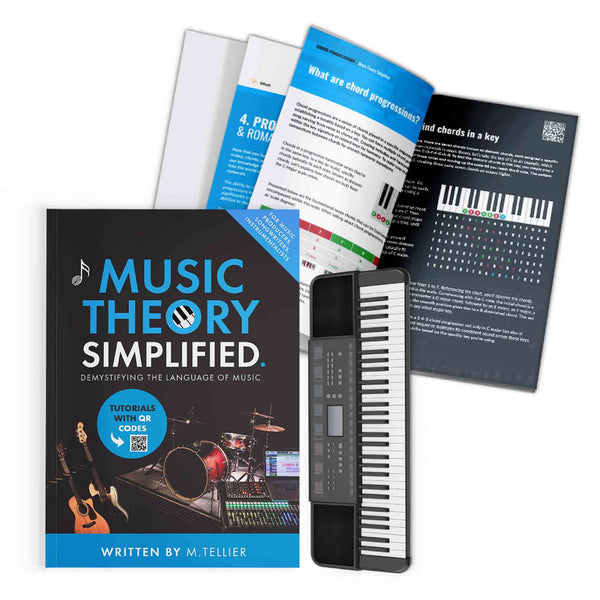

Gain staging is the simplest, most overlooked mixing step. Here's what it is, why it comes first, and a step-by-step...
Číst dál
Reverb blends, delay defines. Here's the real difference between delay and reverb in mixing, the four delay types, the settings...
Číst dál
A panning chart maps where every instrument belongs in the stereo field — center, mid, or wide. Here's how to...
Číst dál
Reverb has only four controls that truly matter — pre-delay, decay, wet/dry, and diffusion. Here's what each one does, the...
Číst dál
A compressor is an automatic volume control that evens out the loud and quiet parts of a track. Here's what...
Číst dálPick your instrument — each has a complete learning system.
 Tabulka akordů na kytaru (PDF soubor)
 Zjednodušená teorie kytary (brožovaná/PDF)
 Podložka pod myš s teorií basové kytary
 Bass Theory Zjednodušeně (Paperback/PDF)
 Hudební teorie zjednodušeně - (brožovaná/PDF)
 Podložka pod myš s přehledem hudební teorie
 Ukulele teorie zjednodušena (Paperback/PDF)
 Podložka pod myš s přehledem teorie ukulele
 Podložka pod myš s podvodníkem na teorii kytary
 Podložka pod myš s přehledem pro mixování a mastering


