 4.8/5 on Trustpilot

Should you master your own track, or pay someone to do it? It's one of the most common questions independent artists wrestle with — and the honest answer isn't "always DIY" or "always hire a pro." It depends on what the song is for, what your budget is, and how experienced your ears are. Get that decision right and you'll save money on the tracks that don't need a pro, and spend it wisely on the ones that do.
This guide breaks down DIY mastering versus professional mastering: what each does well, where each falls short, and a simple framework for choosing between them on any given release. This is the mastering decision, simplified.

What is DIY vs professional mastering?
Mastering is the final step before releasing your music — the stage that shapes how your track will ultimately sound to the world. You have two ways to get it done. DIY mastering means handling it yourself, in your own space, with your own tools. Professional mastering means sending your finished mix to a dedicated mastering engineer who does it for you.
Neither is universally "better." Whether you master yourself or hire out depends on three things: your goals for the release, your budget, and your experience. Both approaches have a legitimate place in a working musician's process — the skill is knowing which one a given song calls for.
How each approach works
DIY mastering is often the natural first step for independent artists. If you're working on demos, early releases, or tracks you'll share with friends, collaborators, or a small online audience, doing it yourself is perfectly fine. It's cost-effective and, just as importantly, it teaches you. Hands-on time with EQ, compression, and limiting deepens your understanding of how to shape sound — knowledge that makes you a better mixer too.
The catch with DIY is perspective. After hours of mixing, your ears adjust and you start missing things — harsh highs, muddy lows, imbalanced instruments that a fresh listener would catch instantly. You're also usually working in an untreated room that colors what you hear.
DIY vs professional mastering at a glance
| DIY mastering | Professional mastering | |
|---|---|---|
| Cost | Free once you own the tools — cost-effective for high-volume output | A per-track fee, so budget usually limits it to key releases |
| Room & gear | Your own space and plugins, usually an untreated room | Treated studio and professional-grade gear built for accuracy |
| Objectivity | Ear fatigue after hours on the mix — harsh highs and muddy lows slip past | Fresh ears that catch what you've stopped hearing |
| Consistency across a release | Harder to match several tracks to each other | Makes an EP or album hang together as one body of work |
| What you gain | Hands-on skill with EQ, compression and limiting that improves your mixing too | Years of experience and precise, subtle adjustments |
| Best for | Demos, early releases, social uploads, tracks for collaborators | Official singles, EPs and albums released under your name |
DIY is cost-effective and educational. A pro brings fresh ears, a treated room, and consistency across a release. Summarised from Mixing & Mastering Simplified, p. 150.
Professional mastering solves exactly those weaknesses. For official releases — singles, EPs, or albums — a mastering engineer is worth the investment. They bring fresh ears, professional-grade gear, and years of experience, catching problems you'd overlook and making precise adjustments. A pro can also make multiple songs sound cohesive, which matters enormously for albums and EPs, and their treated studio environment delivers a level of accuracy that's genuinely hard to achieve at home.
How to choose (4-step framework)
Step 1 — Define what the track is for
Start with the release's purpose. Is this a rough demo, a social media upload, or a track you're sharing with a few collaborators? DIY is the obvious choice. Is it an official single, an EP, or an album going out on streaming platforms under your name? That's where professional mastering earns its keep.
Step 2 — Weigh your budget honestly
Professional mastering costs money per track. If the budget isn't there for every song, that's fine — it doesn't have to be all-or-nothing. Reserve professional mastering for the releases that carry the most weight, and handle the rest yourself. Learning to master saves money precisely so you can spend it where it counts.
Step 3 — Be realistic about your ears and room
DIY mastering is best when absolute perfection isn't required. If you're mastering yourself, stay objective: take breaks so your ears reset, use reference tracks to compare against commercial releases, and listen on different playback systems to catch what your main setup hides. If the track demands accuracy your room simply can't provide, that's a signal to bring in a pro.

Step 4 — Consider combining both
Many artists don't choose once and for all — they do both. Master your demos yourself to practice the craft and save money, then hire a professional for the important releases. Think of it like cutting your own hair: perfectly fine for everyday life, but when it really matters, you'll want an expert's touch.
Common mistakes to avoid
- Treating DIY as a permanent substitute for a pro on major releases. Self-mastering is great for demos, but a flagship single often deserves professional ears.
- Hiring a pro to fix a weak mix. Mastering — DIY or professional — enhances a good mix; it can't repair a bad one. Fix the mix first.
- Mastering your own track with tired ears. After hours on a song, your objectivity is gone. Take breaks and reference before you commit.
- Skipping reference tracks when going DIY. Without a commercial benchmark, you have no reliable target for tone or loudness.
- Assuming every song needs professional mastering. Demos, loosies, and social uploads rarely justify the cost. Match the effort to the stakes.
Why this decision matters
Getting the DIY-versus-professional call right is really about spending your two most limited resources — time and money — where they do the most good. Master everything professionally and you'll burn budget on tracks that never needed it. Master everything yourself and your biggest releases may go out sounding a notch below their potential. The artists who navigate this well treat mastering as a spectrum: they build real DIY skills for the everyday work, and they recognize the handful of releases each year that deserve a professional's fresh ears and treated room. That balance is what lets an independent artist sound consistently competitive without overspending.
Take it further
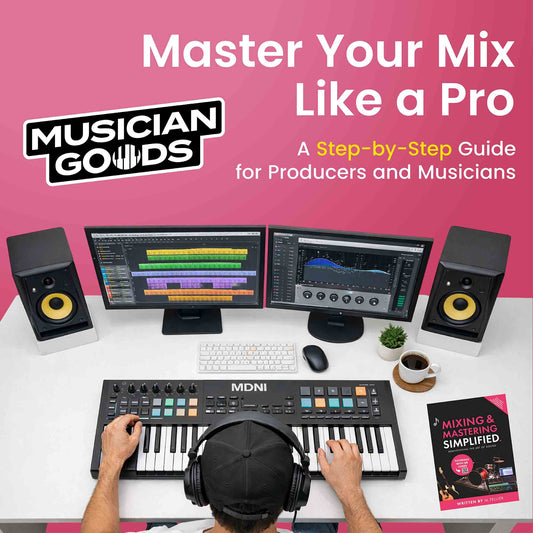
The full mastering chapter — the complete DIY workflow plus the finalizing steps that make a mix ready for either path — is covered in Mixing & Mastering Simplified, in the same clear, visual style as this post.
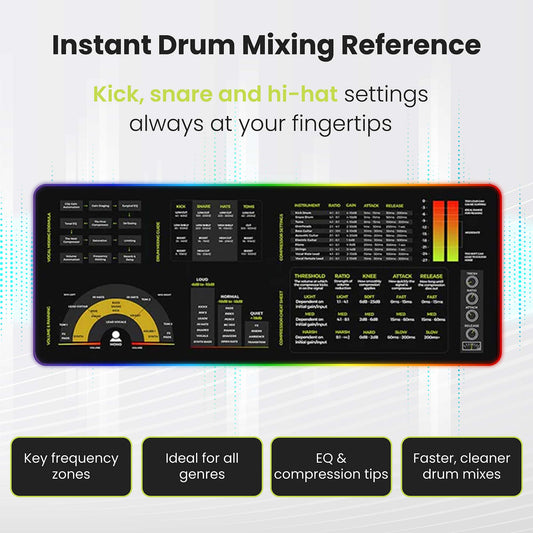
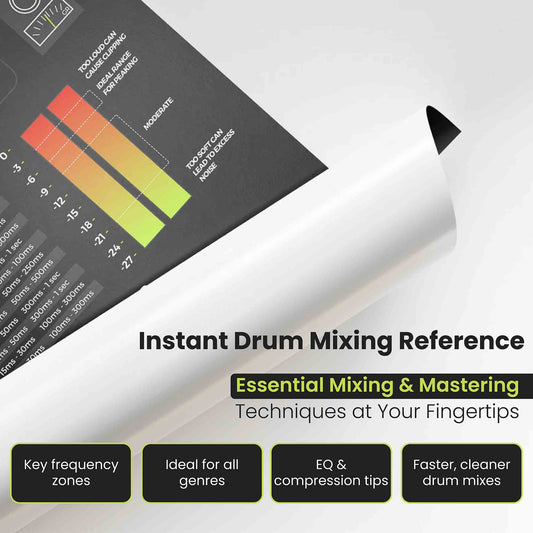
Mastering at home? Keep your chain and targets in view with the Mixing & Mastering Cheat Sheet Poster and Cheat Sheet Mousepad, so EQ, compression, and LUFS targets are always a glance away.
Fine-tuning tonal balance before you master? The Instrument Frequency Cheat Sheet Poster maps the spectrum, or grab the complete set in the Mixing & Mastering Bundle.

The complete mastering chapter — the DIY chain, the tools, the targets, and when to hand it to a pro — laid out visually in one book.
Get Mixing & Mastering SimplifiedFAQs about DIY vs professional mastering
Is DIY mastering good enough for streaming?
For demos, early releases, and smaller uploads, yes — DIY mastering can absolutely be streaming-ready if you use reference tracks, hit sensible LUFS targets, and check your master on multiple systems. For flagship singles and albums, a professional often adds a noticeable edge.
When should I pay for professional mastering?
For official releases where it really matters: singles, EPs, and albums going out under your name. A pro brings fresh ears, accurate monitoring, and the experience to make multiple tracks sound cohesive.
Can mastering fix a bad mix?
No. Whether DIY or professional, mastering enhances a good mix but can't rescue a bad one. Problems like muddiness or imbalance only get magnified. Always sort out the mix before mastering.
How do I stay objective when mastering my own music?
Take regular breaks so your ears reset, compare against reference tracks, and listen on several playback systems — monitors, headphones, phone, and car. These habits counter the ear fatigue that makes self-mastering tricky.
Can I do both DIY and professional mastering?
Yes, and many artists do. Master demos yourself to practice and save money, then hire a professional for the releases that carry the most weight. It's the most cost-effective way to keep improving while still sounding polished where it counts.
This post is part of Musiciangoods' Mixing & Mastering Simplified series — practical audio engineering, taught visually, for producers who want to understand what they're doing and why. Explore more mixing and mastering tools here.





 Guitar Chords Chart Mousepad
 Guitar Theory Simplified (Paperback/PDF)
 Bass Guitar Theory Cheat Sheet Mousepad
 Bass Theory Simplified (Paperback/PDF)
 Music Theory Simplified - (Paperback/PDF)
 Music Theory Cheat Sheet Mousepad
 Ukulele Theory Simplified (Paperback/PDF)
 Ukulele Theory Cheat Sheet Mousepad
 Guitar Theory Cheat Sheet Mousepad
 Mixing Mastering Cheat Sheet Mousepad


