 4.8/5 on Trustpilot

Condenser or dynamic is the first real decision when you buy a microphone, and the marketing around it is misleading. The expensive-looking studio mic is not automatically the right one for your room.
This is a straight comparison built around one question: which microphone will actually sound good in the space you record in? Both are real, professional tools. The choice is about your room, your source, and how much noise you can control, not about which costs more.
The short version: a condenser captures more detail and air but also captures everything wrong with your room, while a dynamic rejects the room and the bleed at the cost of some high-end sparkle. The rest of this article is about which of those trade-offs fits you.
Quick comparison
| Factor | Condenser | Dynamic |
|---|---|---|
| Sensitivity | High — hears fine detail and air | Lower — needs a louder, closer source |
| Room sound | Captures it all, good and bad | Rejects most of it |
| Power needed | 48V phantom power required | None |
| Best on | Vocals, acoustic guitar, detailed sources | Loud sources, untreated rooms, stage |
| Durability | Delicate, needs care | Rugged, hard to damage |
| High end | Bright, open, airy | Warmer, slightly rolled off |
| Typical price | From around €80 upward | From around €90 upward |
What a condenser is genuinely better at

A condenser hears detail that a dynamic misses. The thin, light diaphragm responds to small, fast changes in air pressure, so it captures the breathiness of a vocal, the finger noise on an acoustic guitar, and the high-frequency air that makes a recording sound open and expensive.
That sensitivity is why condensers are the default for studio vocals and acoustic instruments. When you hear a polished vocal that sounds close and intimate, it was almost certainly tracked on a large-diaphragm condenser. The extra top end and the wider frequency response give you more to work with when you mix.
Condensers also reward a good room. If you have treated your space, or even just hung some blankets and recorded away from bare walls, a condenser will capture a clean, flattering picture of the source. The detail works for you instead of against you.
The catch is power and fragility. A condenser needs 48V phantom power from your interface or mixer, and the capsule is delicate enough that drops and humidity can damage it. It is a studio tool that expects to be looked after.
What a dynamic is genuinely better at

A dynamic rejects the room, and for most home setups that is the feature that matters most. The heavier diaphragm needs a louder, closer source to move it, so it largely ignores the reflections, the hum of a computer fan, and the traffic outside that a condenser would happily record.
That makes a dynamic the honest choice for an untreated bedroom. If you cannot control your space, a dynamic placed close to your mouth gives you a usable, dry vocal with far less room sound baked in. Many spoken-word and podcast professionals use broadcast dynamics for exactly this reason.
Dynamics are also built to survive. There is no fragile capsule to worry about, no phantom power to remember, and you can hand one to a guest or take it to a stage without flinching. Loud sources like guitar amps and snare drums are squarely in their comfort zone, where a condenser might distort.
The trade-off is the top end. A dynamic sounds warmer and slightly darker, with less of the airy detail a condenser gives you. For a lot of voices that warmth is flattering, but if you are after a bright, detailed studio vocal in a quiet room, you will miss the sparkle.
Best for which reader
Choose a condenser if: you record vocals or acoustic instruments, you have at least a partly treated or naturally quiet space, and you want the most detailed, open sound to mix with. The sensitivity pays off when the room is on your side, and the detail gives you more options later in the mix.
Choose a dynamic if: you record in an untreated room with noise you cannot control, you track loud sources, or you want a single rugged mic that just works without phantom power and careful handling. The room rejection alone solves the problem most home recordings actually have.
The answer most engineers give but rarely write down: fix the room before you upgrade the mic. A modest dynamic in a quiet, dead corner beats an expensive condenser in a hard, echoey room every time. Spend on treatment and placement first, and the microphone choice becomes far less critical.
Do you need a condenser to sound professional?
No, and this is the most common beginner assumption worth dismantling. Professional results come from the source, the room, the placement, and the mix, not from the mic type. Plenty of commercial vocals were tracked on a humble dynamic, and plenty of amateur recordings on costly condensers sound thin and roomy.
The microphone is one link in a chain. If the room is reflective, a sensitive condenser will capture that reflectivity in high definition, which is the opposite of what you want. A dynamic that hears less of the room can sound more professional in exactly that situation.
Think in terms of fit rather than tier. The right mic is the one that suits your source and your space, and the path to a professional sound runs through treatment, gain staging, and mixing far more than through the price of the capsule.
The recommendation
If you record vocals or acoustic guitar in a reasonably quiet or treated room, buy a large-diaphragm condenser and lean into the detail it gives you. An entry-level studio condenser plus a pop filter and some basic treatment will carry you a long way.
If your room is untreated and noisy, or you want one tough mic that handles anything, buy a cardioid dynamic and record close. You will trade a little air for a much cleaner, drier signal, and that is usually the better deal in a home setup.
Whichever you choose, the microphone is only the start of the signal chain. What you do after you hit record, the gain staging, the EQ, the compression, and the order you apply them, decides far more about the final sound. We wrote Mixing & Mastering Simplified because most home recordists buy the gear before they learn the chain, and the chain is what makes a recording sound finished.

View Mixing & Mastering Simplified →
Frequently asked questions
Is a condenser or dynamic mic better for vocals?
It depends on the room. In a quiet or treated space, a condenser captures more detail and air and is the studio default for vocals. In an untreated, noisy room, a dynamic recorded close often sounds more professional because it rejects the reflections and background noise a condenser would pick up.
Do dynamic microphones need phantom power?
No. Standard dynamic mics work without phantom power because they generate their own signal from a moving coil. Condensers do need 48V phantom power from your interface or mixer. A few active ribbon and specialty dynamics are exceptions, but a typical cardioid dynamic needs nothing extra.
Why does my condenser pick up so much background noise?
Because that is what condensers do. Their high sensitivity captures fine detail, which also means room reflections, computer fans, and outside traffic. The fix is treating the room, recording closer, and using a cardioid pattern, or switching to a dynamic if the noise cannot be controlled.
Can I use a dynamic mic for home studio recording?
Yes, and for many home studios it is the smarter choice. A cardioid dynamic recorded close gives a dry, usable vocal in an untreated room, needs no phantom power, and survives rough handling. You trade some high-end air for a cleaner signal, which is usually the better deal at home.
Does a more expensive microphone sound more professional?
Not on its own. The room, the placement, the source, and the mix matter far more than the price of the mic. An affordable mic that suits your space and source, run through a well-handled signal chain, will beat an expensive mic used in a bad room.
About the author. Melvin Tellier is the founder of Musiciangoods and the author of Mixing & Mastering Simplified. He started the company to make recording and mixing clear and usable for self-taught producers, and he writes these comparisons to help beginners spend on the right gear and learn the signal chain that actually shapes their sound.



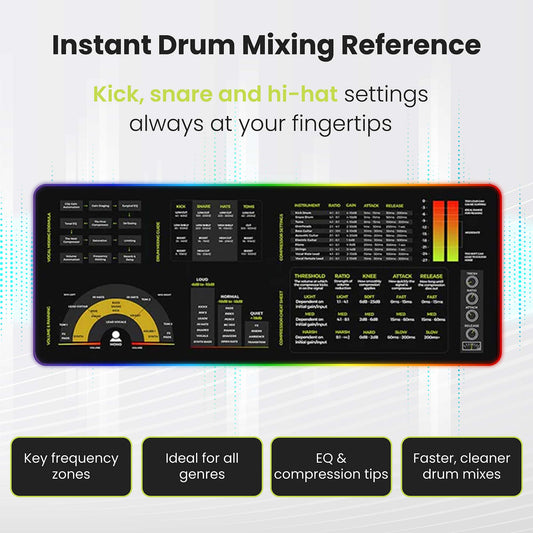



 Mousepad con la tabella degli accordi di chitarra
 Mousepad Cheat Sheet della teoria della chitarra
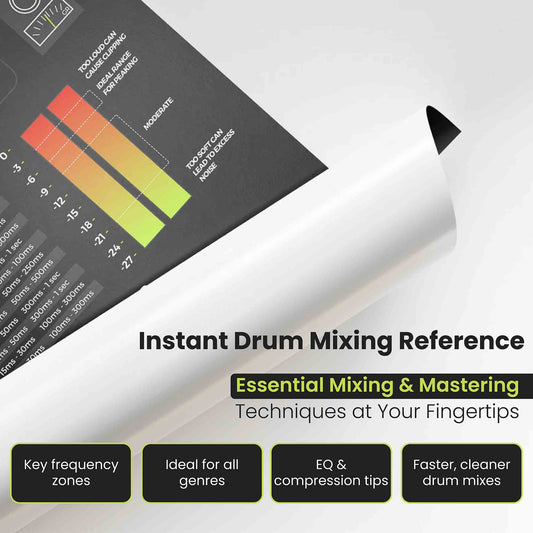
 Foglio di riferimento rapido per missaggio e mastering Mousepad


