4,8/5 en Trustpilot

El patrón de doce teclas, los nombres de las notas, tonos y semitonos, en el teclado del piano, donde la teoría musical se ve con más facilidad. Este capítulo es la base de todo lo demás.
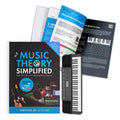
Music Theory Simplified · Demystifying the language of music
Entiende por fin la teoría musical.
Deja de guessing.
La mayoría de la gente memoriza canciones. Muy pocos entienden por qué funcionan.
Este es el sistema visual que convierte la teoría musical de algo aleatorio en algo obvio — para que puedas componer, improvisar con intención, tocar de oído y por fin entender lo que tocas. Se enseña con el teclado y sirve para cualquier instrumento. Sin teoría previa.
Domina la teoría musical
PDF al instante · Empieza esta noche
 Envío con seguimiento a Italia · Plazos de entrega
120
Páginas
Vista previa · 60 s
Dentro del libro
Envío rápido a todo el mundo
EE. UU., UE, R. U., AU, CA · normalmente 3–7 días
Envío con seguimiento
Seguimiento en tiempo real en cada pedido
Asegurado y seguro
¿Perdido o dañado? Te lo reponemos gratis
Entrega inmediata del PDF
Léelo esta noche · sin esperas
The uncomfortable truth
Most people memorize songs.
Very few understand music.
You can play a few songs. Maybe some chords you found online. But you can't explain why any of it works — and that's the wall that stops most self-taught musicians from ever becoming truly musical.
What you have now
Memorized shapes.
You can play songs. You remember chord shapes. You know a few scales. But if someone asks you to play in a different key, you freeze — because you don't know why the shapes work.
- Can't transpose to a new key
- Can't write your own progressions
- Can't follow what other musicians say
What you get
The language behind them.
Once you see why a chord is built the way it is, the shapes stop being random. They become a vocabulary you can speak fluently — in any key, across the whole keyboard, in any musical situation.
- Move freely between any key
- Write progressions intentionally
- Speak the language of music
Read this before you blame yourself
Music theory wasn't hard.
The explanations were.
Most theory books were written by classically-trained pianists for conservatory students. They assumed you read sheet music. They used Italian terms. They asked you to memorize forty modes before you'd written a single song.
That format wasn't built for self-taught musicians and producers who learn by seeing, hearing, and playing. The information wasn't wrong — the delivery was.
"I started in 2008 with a MIDI keyboard and FL Studio, no theory. From 2010 to 2015 I taught music production on YouTube as MellaMayne — but every theory book I opened was written for conservatory students, not self-taught producers. So I wrote the book I wish I'd had at the start: Music Theory Simplified — the whole language of music, explained visually on the piano."
— Melvin Tellier · Founder, Musiciangoods · Self-taught since 2008
"Theory clicks when you stop trying to memorize it
and start seeing it on the keyboard."
and start seeing it on the keyboard."
Así lo enseñan la mayoría de los libros de teoría.
Arrastra para descubrir una forma mejor.
Arrastra el control y descubre por qué más de 200.000 músicos prefieren Teoría musical simplificada.

←Arrastra el control→
APRENDIZAJE VISUALDiagramas, colores e imágenes del teclado te ayudan a aprender más rápido.
ENFOQUE PRÁCTICOCada concepto conecta directamente con tocar música real.
HECHO PARA PRINCIPIANTESEscrito para músicos autodidactas. No necesitas ninguna teoría previa.
APRENDE CON CONFIANZAEntiende por fin por qué funciona la música y exprésate con libertad.
Códigos QR incluidos
¿Atascado con un concepto? Escanea y mira.
Cada capítulo incluye códigos QR impresos en la propia página. Abre la cámara del móvil, escanea el código y mira al instante un breve videotutorial en el que Melvin te explica el concepto en persona.
Sin app, sin registro.
Más de 50 videotutoriales en los 7 capítulos
Funciona en cualquier móvil — sin app
Los mismos vídeos sirven para el PDF y la edición impresa

Hojea el libro
Mira exactamente cómo enseña el libro.
Explore real chapters and flip through actual pages from Music Theory Simplified.

1 / 5
Built for clarity. Designed for results.
Every chapter tells you
exactly where you're going.
No fluff. No wasted time. Each chapter is structured to help you learn faster, stay focused, and actually understand.
01
Nivel
Sabrás si un capítulo es de nivel principiante, intermedio o avanzado antes de empezar.
02
Tiempo necesario
La mayoría de los capítulos llevan de 1 a 3 horas, así que aprendes a tu ritmo.
03
Objetivo claro
Cada capítulo empieza diciéndote lo que sabrás hacer al terminarlo.
 123456
04
Lo que aprenderás
Mira exactamente qué conceptos y habilidades cubre el capítulo.
05
Lo que necesitarás
Sin sorpresas. Cada capítulo te dice exactamente qué herramientas usarás.
06
Sáltalo si ya lo sabes
¿Ya lo dominas? Salta adelante y céntrate en lo que no sabes.
Un sistema de aprendizaje completo.
Guías de jerga. Chuletas visuales. Videolecciones con QR. Todo lo que necesitas para entender por fin la teoría musical.
GUÍAS DE JERGA7 guías de jerga desglosan los términos musicales complejos — una al final de cada capítulo.
CHULETAS VISUALESPáginas de referencia con código de colores, incluida la tabla completa de acordes, el mapa de modos y el círculo de quintas.
VIDEOLECCIONES CON QREscanea los códigos QR de las páginas clave para ver explicaciones en vídeo paso a paso.
RESÚMENES DE CAPÍTULOPuntos clave al final de los 7 capítulos para repasar y afianzar lo que has aprendido.

What's inside the book
120 pages.
7 fundamental concepts. One connected system.
Every chapter builds on the last. Each one includes visual diagrams, a cheat sheet, a jargon guide, and a QR code linking to a video tutorial. Click any chapter to see what's inside.
01 Fundamentos del piano
02 Componer: tonalidades y escalas
Qué es realmente una «tonalidad». La escala mayor, la escala menor natural, las tonalidades relativas y una introducción a los modos musicales, todo representado visualmente, con una tabla completa de escalas para piano. El capítulo con el que las escalas por fin cobran sentido.
03 Armonía: guía de acordes
El capítulo más grande del libro. Intervalos musicales, todos los tipos de acordes, tríadas y acordes de séptima, todas las fórmulas de acordes, inversiones y voicings, más una tabla completa de acordes para piano. Todo el vocabulario de la armonía.
04 Progresiones de acordes
Los acordes diatónicos, explicados. Números romanos, acordes en tonalidad menor y grados de la escala. Las tres progresiones legendarias (I-IV-V, I-V-vi-IV y IV-I-V-vi), los patrones detrás de la mayoría de la música popular, por fin descifrados.
05 Notación musical
Aprende a leer música. Las claves, las figuras, las notas ligadas y con puntillo: lo esencial de la notación estándar, explicado de forma sencilla y sin la jerga del conservatorio.
06 Ritmo y compás
El latido de la música. La rejilla rítmica, los tiempos fuertes y débiles y la métrica (compases como 3/4, 4/4 y 2/4), y cómo el ritmo lo moldea todo, desde una balada hasta un tema de baile.
07 El círculo de quintas
El capítulo que lo une todo. Las armaduras, las tonalidades con sostenidos y bemoles, las tonalidades solapadas y relativas, y nuestro círculo de quintas simplificado, el diagrama más útil de la música. Al final, leerás música con fluidez.
El momento en que todo encaja
Mira cómo el teclado pasa de aleatorio a obvio.
Toggle below to see the difference between how most beginners see the keyboard — and how you'll see it after the Harmony chapter.

La teoría parece aleatoria.
Aprendes un acorde. Luego una escala. Luego una armadura. Cada cosa parece una regla aparte que memorizar. Olvidas cuál es cuál y te quedas atascado, siempre adivinando.
Decenas de reglas sin relación que memorizar una a una.

Todo es un mismo patrón.
Cada acorde es fundamental + 3.ª + 5.ª. Cada tonalidad sigue la misma fórmula. En cuanto ves cómo se conectan los intervalos en el teclado, puedes construir cualquier acorde en cualquier tonalidad.
Decenas de reglas se convierten en un solo sistema que aplicas en todas partes.
Real readers · Real reviews
The book that finally made theory click
for thousands of self-taught musicians.

Liam H.
After 12 years, music theory finally makes sense.
I've owned at least seven theory books. Every single one assumed I could already read sheet music. This one starts where I actually am — looking at a keyboard, wondering why anything works. By the Harmony chapter I understood intervals for the first time in my life. The relief is hard to describe.
Chloe D.
Two weeks in and I'm writing my own progressions.
I used to write songs by stacking chords until something sounded okay. Now I actually choose chords on purpose because I understand what they'll do emotionally. The Chord Progressions chapter alone unlocked patterns I'd avoided for years.
Andre P.
I can finally play without freezing.
Someone calls a key, I used to panic and stick to the same few notes. Now I actually know what notes work and why. Started picking up songs by ear last month — something I thought I'd never be able to do. This book is the cheat code I wish I'd had a decade ago.
From Shopify · Judge.me verified
Real photos from real readers.
Understood the keyboard in 2 days.
I'm not exaggerating. The Harmony chapter broke down what every other book skipped.
10 years playing. Scales finally make sense.
The Keys & Scales chapter showed me scales as patterns instead of random notes. Mind blown.
Best gift I've ever given my son.
Three weeks later he's writing his own songs and explaining theory to me. The QR videos are gold.
Wrote a full song in one weekend.
The Chord Progressions chapter and the Roman numerals system is pure gold. Bought the mousepad too.
Bridged my ear and the theory in a weekend.
As a producer who only knew the piano roll, this book finally connected the sounds to the theory.
The QR videos made the chords chapter click.
Was stuck on chord building for 20 minutes, scanned the code, watched the 2-min video, instant clarity. Best theory book I've bought.
I'm 56 and finally feel like I understand music.
Wish I had this 30 years ago. The Harmony chapter alone was worth twice the price.
Finally a theory book that doesn't feel like school.
I'd given up on theory three times before this. The 'why' explanations finally clicked. Now I'm writing songs again.
I keep it on my piano every practice session.
Lives on my piano. Open it, scan a QR, learn one concept, play. Repeat. Best $25 I've spent on music.
Mi nueva biblia de teoría.
Por fin un libro de teoría que entiendo. Los códigos QR con los videos de Melvin son oro puro.
Worth every cent of the investment.
Clear writing, no fluff, immediately useful. The Circle of Fifths finally clicked after years of trying.
Wish someone gave me this 10 years ago.
I'm a self-taught player and theory always felt out of reach. This book made scales feel obvious.
Real customers · Real reactions
Hear it from musicians
who've been through it.
Unedited videos from readers about their experience with the book. The good, the honest, and the "I wish I'd found this sooner" moments.
"@leylasmusic da su opinión sincera"
@leylasmusicVer sistema
"@daynabeemusic explica por qué funciona este libro"
@daynabeemusicVer sistema
"@martin.dalesio descifra la teoría musical"
@martin.dalesioVer sistema
"@maxveresmusic escribe su primera canción"
@maxveresmusicVer sistema
"@beccasmelodies por fin entiende la teoría"
@beccasmelodiesVer sistema
"@sjplaysmusic lo recomienda"
@sjplaysmusicVer sistema
A complete learning system
One transformation.
Four tools.
The book teaches the framework. The companions make it stick.
El libro
La base
120 páginas para pasar de «¿qué es un acorde?» a «puedo escribir cualquier progresión».
€21,99
Add to cart
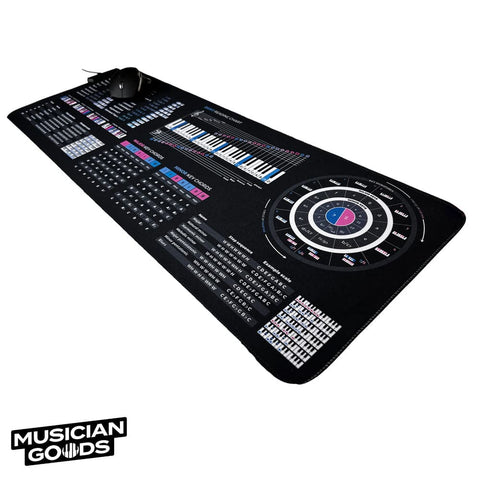
La alfombrilla
Refuerzo diario
La chuleta está bajo tus manos todos los días. La teoría se convierte en memoria muscular.
€27,99
Add to cart
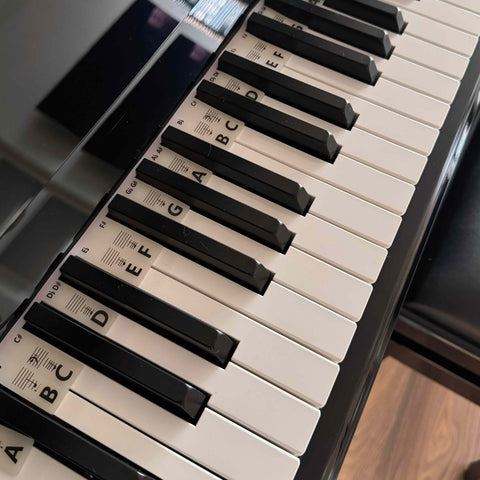
Las pegatinas para piano
Entrenamiento visual
Marca cada tecla con pegatinas de notas removibles. Entrena la vista mientras tocas.
€11,99
Add to cart
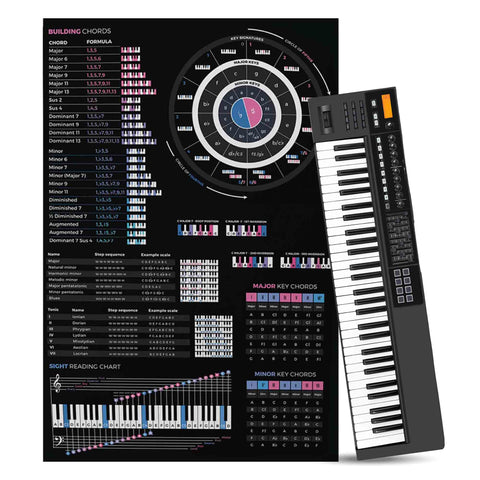
El póster de pared
Aprendizaje pasivo
Escalas, intervalos y el círculo de quintas, siempre en tu campo de visión.
€27,99
Add to cart
Choose your starting point
Pick your edition.
Start understanding tonight.
Ahorra hasta un 20% con nuestro descuento por volumen — cuanto más añades, más ahorras.
Elige el idioma
PDF al instante
Digital
El libro — PDF + EPUB
€21,99
Entrega inmediata · PDF + EPUB
- 120-page PDF + EPUB · all 7 chapters
- QR video tutorials included
- Open on Kindle, iPad, Apple Books, anywhere
- 30-day refund
1
Consigue el PDF
Edición impresa
El libro — edición impresa
Envío con seguimiento a todo el mundo
- Full-color paperback (120pp)
- QR video tutorials included
- Worldwide tracked shipping
- 30-day refund
1
Consigue la edición impresa
Más popular
Impreso + PDF
Mejor relación calidad-precio
Edición completa
€56.98
Ahorra €16.99 · Impreso + digital
- Full-color paperback (120pp)
- Instant PDF + EPUB (read tonight)
- QR video tutorials
- Worldwide tracked shipping
- 30-day refund
1
Consigue la completa
Ahorra más al comprar varios libros
Abajo tienes packs de varios libros — además de descuentos por volumen automáticos en cualquier combinación.
Piano + Ukulele
Piano + Ukulele
Desde €32,99
3-book bundle
Guitar + Bass + Piano
Desde €47,99
Mejor relación calidad-precio
All 4 books
Guitar + Bass + Piano + Ukulele
Desde €64,99
Book + Cheat Sheet
Book + mousepad cheat sheet
Desde €57,99
Los packs incluyen el mismo contenido que los libros sueltos.
30-day refund
Worldwide tracked shipping
Garantía de devolución de 30 días.
Si el libro no te ayuda a entender por fin la teoría, escríbenos en un plazo de 30 días. Te devolvemos hasta el último céntimo, sin preguntas.
Regalos gratis desde €35 y €55
En pack, ahorra hasta un 25%
Accessories for your Music Theory book.
64% of readers added at least one. Bundle & save up to 25% — plus unlock free gifts at €35 and €55.
The transformation
From confusion
to fluency.
This isn't about adding more information. It's about how you experience music from this point forward.
Before
- Memorizing chord shapes
- Stuck playing the same few chords
- Noodling without direction
- Confused when musicians talk theory
- Writing progressions that "sort of work"
- Freezing when someone calls a key
After
- Writing songs that actually sound the way you want
- Playing songs by ear instead of hunting for tabs
- Improvising with intention, not luck
- Learning new songs faster by recognizing patterns
- Jamming confidently in any key, across the whole keyboard
- Finally understanding what you're playing — and why
What makes this different from free YouTube tutorials?
YouTube teaches isolated tricks. This teaches a connected system. Most free tutorials assume you already understand something the previous one didn't teach — so concepts never compound. This book gives you the framework that ties them together, in order, so each chapter builds on the last.
I'm a complete beginner. Is this too advanced for me?
No. The book starts with zero assumptions. Chapter 1 begins with the keyboard, note names and the music alphabet. Each chapter builds on the last. Most beginners report concepts clicking within the first week.
I've tried theory before and it always felt overwhelming. Why will this be different?
Because most theory is taught as abstract concepts on paper. This book teaches everything visually on the piano keyboard — where music theory is easiest to see. That's why readers say it finally clicks where other books didn't.
Do I need to read sheet music already?
No. You'll learn to read music inside the book — the Notation chapter covers it from scratch. Nothing is assumed. Everything starts at the beginning.
Does it work for my instrument, not just piano?
Yes. The theory in this book — scales, chords, progressions, rhythm, the circle of fifths — is universal. It's taught on the piano because that's where it's clearest to see, then it applies to any instrument you play.
What if it doesn't help me?
30-day full refund. No forms, no friction, no "tell us why." If theory still feels confusing after 30 days, we refund you and you keep what you've learned.
What's the difference between the PDF and the paperback?
Content is identical — same 120 pages, same QR videos. The PDF arrives instantly by email and is searchable on any device. The paperback is a full-color print edition shipped to your door. The Complete Edition tier includes both.
How long does shipping take?
Physical orders are processed within 1–3 business days. Delivery estimates vary by destination and shipping service; see our Shipping Policy for current timings. You'll get a tracking link by email as soon as your order leaves our warehouse. PDF orders are instant — delivered to your inbox within minutes of checkout.
How do the QR codes work? Do I need internet?
Each chapter has QR codes printed on the page. Open your phone's camera, point at the code, tap the link that appears, and the video starts. You'll need an internet connection to stream the videos, but the book itself works completely offline.
Is this only useful for pianists?
Not at all. The piano keyboard is simply the clearest way to see how music works — but every concept (scales, chords, harmony, rhythm, the circle of fifths) applies to guitar, bass, ukulele, voice, production, any instrument. It's a music theory book, taught on the keyboard.
How long does it take to finish the book?
There's no rush. Each chapter is built around bite-sized lessons with an estimated time at the top (most are 15–60 min). Reading cover-to-cover takes most readers 6–12 hours. But most don't read it once — they reference it for years. Think of it less like a novel, more like a manual you keep on your desk.
Can I get this if I'm in the EU? VAT & customs?
Yes — we ship worldwide. VAT is calculated at checkout based on your country, so the price you pay is the final price. For paperback orders within the EU, no separate customs fees apply.
Part of the Theory Simplified series
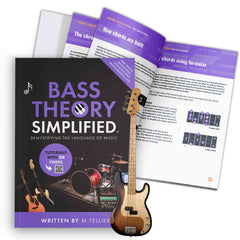
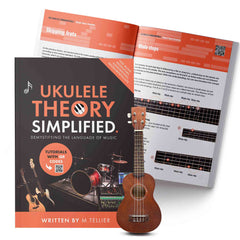
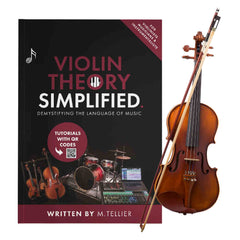
The same method, refined across five instruments.
Built on the same visual, plain-English approach that made Music Theory Simplified (the piano edition) a hit. Each book is independent — pick the one for your instrument.
Deja de adivinar.
Empieza a entender la música.
Un sistema visual creado para músicos autodidactas.