4,8/5 auf Trustpilot

Das 12-Ton-Muster, Notennamen, Ganz- & Halbtonschritte — zuerst auf der Klaviertastatur erklärt, weil Musiktheorie dort am leichtesten zu sehen ist. Überspring dieses Kapitel, wenn du schon Klavier spielst. Die meisten Bassisten tun das nicht — und dieses eine Kapitel erschließt alles andere im Buch.
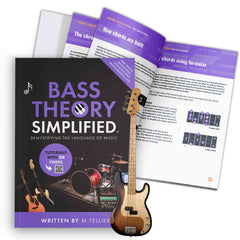
Bass Theory Simplified · Demystifying the language of music
Versteh endlich das Bassgriffbrett.
Stop memorizing shapes.
Die meisten Bassisten lernen Griffbilder auswendig. Nur wenige verstehen, warum sie funktionieren.
Das ist das visuelle System, das das Bassgriffbrett von zufällig zu offensichtlich macht — damit du Songs schreiben, gezielt improvisieren, nach Gehör spielen und endlich verstehen kannst, was du spielst. Keine Noten. Kein Klavier. Kein Theorie-Vorwissen nötig.
Entschlüssle das Griffbrett
Sofort als PDF · Heute Abend starten
 Versand mit Sendungsverfolgung nach Vereinigtes Königreich · Lieferzeiten
183
Pages
Vorschau · 60 Sek.
Ein Blick ins Buch
Schneller weltweiter Versand
USA, EU, UK, AU, CA · meist 3–7 Tage
Versand mit Sendungsverfolgung
Echtzeit-Tracking bei jeder Bestellung
Versichert & sicher
Verloren oder beschädigt? Wir ersetzen es kostenlos
PDF sofort geliefert
Heute Abend lesen · ohne Wartezeit
The uncomfortable truth
Most bassists memorize shapes.
Very few understand music.
You can play. You know your open chords. Maybe a pentatonic scale. But you can't explain why any of it works — and that's the wall that stops most bassists from ever becoming musical.
What you have now
Memorized shapes.
You can play songs. You remember chord grips. You know a few scale boxes. But if someone asks you to play in a different key, you freeze — because you don't know why the shapes work.
- Can't transpose to a new key
- Can't write your own progressions
- Can't follow what other musicians say
What you get
The language behind them.
Once you see why a chord is built the way it is, the shapes stop being random. They become a vocabulary you can speak fluently — in any key, anywhere on the bass neck, in any musical situation.
- Move freely between any key
- Write progressions intentionally
- Speak the language of music
Read this before you blame yourself
Music theory wasn't hard.
The explanations were.
Most theory books were written by classically-trained pianists for conservatory students. They assumed you read sheet music. They used Italian terms. They asked you to memorize forty modes before you'd written a single song.
That format wasn't built for self-taught bassists who learn by seeing, hearing, and playing. The information wasn't wrong — the delivery was.
"I started in 2008 with a MIDI keyboard and FL Studio, no theory. From 2010 to 2015 I taught music production on YouTube as MellaMayne — but I still couldn't really play the bass. Years later, after my first book (Music Theory Simplified, for piano) found readers, I wrote the bass version I wish I'd had at the start."
— Melvin Tellier · Founder, Musiciangoods · Self-taught since 2008
"Theory clicks when you stop trying to memorize it
and start seeing it on the bass neck."
and start seeing it on the bass neck."
So lehren es die meisten Theoriebücher.
Zieh und entdecke einen besseren Weg.
Zieh den Regler und sieh, warum über 200.000 Musiker Bass: Theorie einfach erklärt bevorzugen.

←Zieh den Regler→
VISUELL LERNENDiagramme, Farben & Griffbrett-Grafiken helfen dir, schneller zu lernen.
PRAXISNAHJedes Konzept führt direkt zum Spielen echter Musik.
FÜR BASSISTEN GEMACHTVon einem Bassisten für Bassisten geschrieben. Keine Klavierkenntnisse nötig.
LERNE MIT SELBSTVERTRAUENVersteh endlich, warum Musik funktioniert, und drück dich frei aus.
Mit QR-Codes
Hängst du bei einem Konzept? Einfach scannen und ansehen.
Jedes Kapitel enthält QR-Codes, direkt auf die Seite gedruckt.
Keine App, kein Login.
Über 50 Video-Tutorials in allen 9 Kapiteln
Funktioniert auf jedem Handy — keine App nötig
Dieselben Videos für PDF und Taschenbuch
Blättere durch das Buch
Sieh genau, wie das Buch erklärt.
Explore real chapters and flip through actual pages from Bass Theory Simplified.

1 / 5
Built for clarity. Designed for results.
Every chapter tells you
exactly where you're going.
No fluff. No wasted time. Each chapter is structured to help you learn faster, stay focused, and actually understand.
01
Schwierigkeitsgrad
Du weißt vorher, ob ein Kapitel für Anfänger, Fortgeschrittene oder Profis ist.
02
Zeitaufwand
Die meisten Kapitel dauern 1-3 Stunden, du lernst also in deinem Tempo.
03
Klares Ergebnis
Jedes Kapitel sagt dir zuerst, was du danach können wirst.
 123456
04
Was du lernst
Sieh genau, welche Begriffe und Fähigkeiten das Kapitel abdeckt.
05
Was du brauchst
Keine Überraschungen. Jedes Kapitel sagt dir genau, welche Hilfsmittel du nutzt.
06
Überspringen, wenn du das kennst
Schon bekannt? Spring weiter und konzentrier dich auf das, was du noch nicht weißt.
Ein komplettes Lernsystem.
Fachbegriff-Guides. Visuelle Spickzettel. QR-Videolektionen. Alles, was du brauchst, um Musiktheorie endlich zu verstehen.
FACHBEGRIFF-GUIDES8 Fachbegriff-Guides erklären schwierige Musikbegriffe — einer am Ende jedes Kapitels.
VISUELLE SPICKZETTELFarbcodierte Übersichtsseiten, darunter die komplette Akkordtabelle, die Modi-Übersicht und der Quintenzirkel.
QR-VIDEOLEKTIONENScanne die QR-Codes auf wichtigen Seiten und sieh dir Schritt-für-Schritt-Erklärvideos an.
KAPITELZUSAMMENFASSUNGENKernpunkte am Ende aller 8 Kapitel, um das Gelernte zu wiederholen und zu festigen.

What's inside the book
142 pages.
8 fundamental concepts. One connected system.
Every chapter builds on the last. Each one includes visual diagrams, a cheat sheet, a jargon guide, and a QR code linking to a video tutorial. Click any chapter to see what's inside.
01 Die Grundlagen des Klaviers
02 Die Grundlagen des Basses
Klavier vs. Bass — endlich übersetzt. Wie die Saiten gestimmt sind, warum der Basshals so aufgebaut ist und wie jedes Konzept aus Kapitel 1 auf den Basshals passt. Die Brücke zwischen Musiktheorie und deinem Instrument.
03 Tonarten & Tonleitern
Was eine „Tonart“ eigentlich ist. Dur-Tonleiter, natürliches Moll, Dur- & Moll-Pentatonik — alles visuell über das ganze Bassgriffbrett dargestellt. Tonleiter-Positionen, Tonleiter-Systeme, Paralleltonarten und eine Einführung in die Kirchentonarten. Laut den meisten Lesern das Kapitel, durch das der Basshals endlich Sinn ergab.
04 Harmonie — Intervalle & Akkorde
Das größte Kapitel im Buch. Intervalle, Saitenintervalle, alle Akkordtypen (Dur, Moll, sus, übermäßig, vermindert, Dominante), wie Akkorde auf dem Bass aufgebaut sind, alle Akkordformeln und Umkehrungen. Das komplette Vokabular der Harmonie — angepasst an die tiefen Töne.
05 Die Modi-Karte
Diatonische Akkorde erklärt. Römische Ziffern. Tonleiterstufen. Akkordbewegungen in Dur und Moll. Die drei legendären Akkordfolgen: I-IV-V, I-V-vi-IV und IV-I-V-vi — die Muster hinter den meisten bekannten Basslines, endlich entschlüsselt.
06 Akkordfolgen
Ein praktischer Leitfaden zu Notenschrift, Basstabulatur und Bass-Tab-Techniken (Hammer-ons, Pull-offs, Slides, Slaps). Notenschlüssel, Noten und Notenwerte — so erklärt, wie Bassisten sie wirklich nutzen, nicht wie klassische Lehrbücher sie lehren.
07 Notenschrift
Der Herzschlag der Musik. Metrum und Taktarten — 3/4, 4/4, 2/4 — und wie Rhythmus alles prägt, vom Funk-Groove bis zum Metal-Riff. Warum die meisten Bassisten glauben, sie seien „von Natur aus rhythmisch“, und was ihnen tatsächlich fehlt.
08 Rhythmus & Takt
Das Kapitel, das alles verbindet. Vorzeichen, Paralleltonarten und unsere vereinfachte Version des Quintenzirkels — das nützlichste Diagramm der Musiktheorie. Am Ende dieses Kapitels kannst du Musik wirklich lesen.
09 Der Quintenzirkel
Der Moment, in dem es klick macht
Sieh zu, wie das Bassgriffbrett von zufällig zu offensichtlich wird.
Toggle below to see the difference between how most bassists see the bass neck — and how you'll see it after the Harmony chapter.

Das Griffbrett wirkt zufällig.
Du lernst ein Griffbild. Dann ein anderes. Und vergisst, welches welches ist.
132 zusammenhanglose Töne, einer nach dem anderen auswendig zu lernen.

Das Griffbrett ist ein Muster.
Jeder Akkord ist Grundton + Terz + Quinte in verschiedenen Lagen.
Aus 132 Tönen wird ein System, das du überall anwendest.
Real readers · Real reviews
The book that finally made theory click
for thousands of self-taught bassists.

Marcus T.
After 12 years, the bass neck finally makes sense.
I've owned at least seven theory books. Every single one assumed I could already read sheet music or play piano. This one starts where I actually am — looking at a fretboard, wondering why anything works. By Chapter 4 I understood intervals for the first time in my life. The relief is hard to describe.
Jamal C.
Two weeks in and I'm writing my own progressions.
I used to write songs by stacking chords until something sounded okay. Now I actually choose chords on purpose because I understand what they'll do emotionally. The modes chapter alone unlocked five new positions on the bass neck I'd avoided for years.
Kenji T.
I can finally jam without freezing.
Someone calls a key in a jam, I used to panic and noodle around the same five frets. Now I actually know where to play and what notes work. Started picking up songs by ear last month — something I thought I'd never be able to do. This book is the cheat code I wish I'd had a decade ago.
From Shopify · Judge.me verified
Real photos from real readers.
Understood the bass neck in 2 days.
I'm not exaggerating. Chapter 4 broke down what every other book skipped.
10 years playing. Modes finally make sense.
The Keys & Scales chapter showed me modes as colors instead of seven random shapes. Mind blown.
Wrote a full song in one weekend.
The Chord Progressions chapter and the Roman numerals system is pure gold. Bought the mousepad too.
Bridged piano theory and bass in a weekend.
As a producer who only knew theory on piano roll, this book finally got me playing it on bass.
The QR videos made the modes chapter click.
Was stuck on modes for 20 minutes, scanned the code, watched the 2-min video, instant clarity. Best theory book I've bought.
I'm 56 and finally feel like I understand bass.
Wish I had this 30 years ago. The Harmony chapter alone was worth twice the price.
Finally a theory book that doesn't feel like school.
I'd given up on theory three times before this. The 'why' explanations finally clicked. Now I'm writing songs again.
I keep it on my amp every practice session.
Lives on top of my amp. Open it, scan a QR, learn one concept, jam. Repeat. Best $25 I've spent on bass.
Real customers · Real reactions
Hear it from bassists
who've been through it.
Unedited videos from readers about their experience with the book. The good, the honest, and the "I wish I'd found this sooner" moments.
"@leylasmusic sagt ehrlich ihre Meinung"
@leylasmusicSystem für
"@daynabeemusic erklärt, warum dieses Buch funktioniert"
@dangallaghermusicSystem für
"@martin.dalesio knackt den Basshals"
@martin.dalesioSystem für
"@maxveresmusic schreibt seinen ersten Song"
@maxveresmusicSystem für
"@beccasmelodies versteht endlich Theorie"
@beccasmelodiesSystem für
"@sjplaysmusic empfiehlt es"
@sjplaysmusicSystem für
A complete learning system
One transformation.
Four tools.
The book teaches the framework. The companions make it stick.
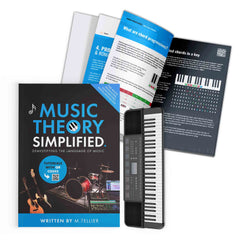
Das Buch
Das Grundgerüst
183 Seiten von „Was ist ein Akkord?“ bis „Ich kann jede Akkordfolge schreiben.“
£19.00
Add to cart
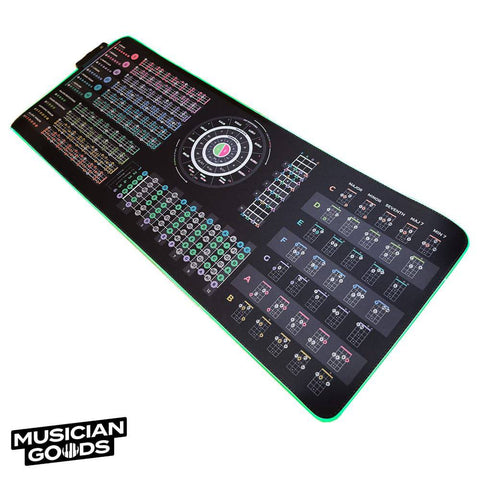
Das Mauspad
Tägliche Wiederholung
Der Spickzettel liegt jeden Tag unter deinen Händen. Theorie wird zum Muskelgedächtnis.
£22.00
Add to cart
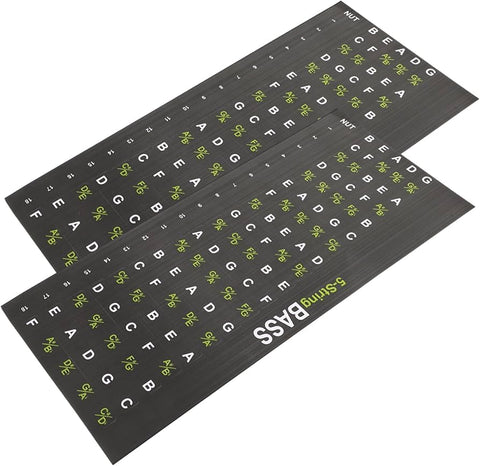
Griffbrett-Sticker
Visuelles Training
Übertrag das Notensystem auf deinen Hals. Trainier deine Augen beim Spielen.
£9.00
Add to cart
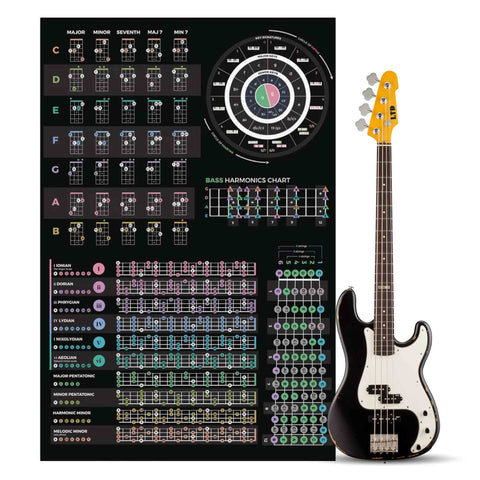
Das Wandposter
Passives Lernen
Tonleitern, Intervalle und die Modi-Karte — immer im Augenwinkel.
£26.00
Add to cart
Choose your starting point
Pick your edition.
Start understanding tonight.
Bundle-Rabatt aktiv — spare bis zu 20%, wenn du unten Extras hinzufügst.
Sprache wählen
Sofort als PDF
Digital
Das Buch — PDF
£19.00
Sofortige Lieferung
- 183-page PDF · all 9 chapters
- QR video tutorials included
- Searchable, any device
- 30-day refund
1
PDF holen
Physical
Das Buch — Taschenbuch
Weltweiter Versand mit Sendungsverfolgung
- Full-color paperback (142pp)
- QR video tutorials included
- Worldwide tracked shipping
- 30-day refund
1
Taschenbuch holen
Am beliebtesten
Print + PDF
Bestes Preis-Leistungs-Verhältnis
Komplettausgabe
€56.98
Spare €16.99 · Print + digital
- Full-color paperback (142pp)
- Instant PDF (read tonight)
- QR video tutorials
- Worldwide tracked shipping
- 30-day refund
1
Komplett holen
Spare mehr beim Kauf mehrerer Bücher
Fertige Sets mit mehreren Büchern
Bass + Bass
Save €9.99
Ab £29.00
Bass + Ukulele
Save €9.99
Ab £29.00
Bestes Preis-Leistungs-Verhältnis
3-book bundle
Bass + Bass + Piano
Ab £41.00
All 4 books
Bass + Bass + Piano + Ukulele
Ab £56.00
Bundles enthalten denselben Inhalt wie die einzelnen Bücher.
30-day refund
Worldwide tracked shipping
30 Tage Geld-zurück-Garantie.
Wenn dir das Buch nicht hilft, Theorie endlich zu verstehen, schreib uns innerhalb von 30 Tagen. Wir erstatten jeden Cent — ohne Wenn und Aber.
Gratisgeschenke ab €35 & €55
Im Bundle bis zu 25% sparen
Accessories for your Bass Theory book.
64% of readers added at least one. Bundle & save up to 25% — plus unlock free gifts at €35 and €55.
The transformation
From confusion
to fluency.
This isn't about adding more information. It's about how you experience the bass from this point forward.
Before
- Memorizing chord shapes
- Stuck in two positions on the bass neck
- Noodling without direction
- Confused when musicians talk theory
- Writing progressions that "sort of work"
- Freezing when someone calls a key
After
- Writing songs that actually sound the way you want
- Playing songs by ear instead of hunting for tabs
- Improvising with intention, not luck
- Learning new songs faster by recognizing patterns
- Jamming confidently in any key, anywhere on the bass neck
- Finally understanding what you're playing — and why
What makes this different from free YouTube tutorials?
YouTube teaches isolated tricks. This teaches a connected system.
I'm a complete beginner. Is this too advanced for me?
No. The book starts with zero assumptions.
I've tried theory before and it always felt overwhelming. Why will this be different?
Because most theory is taught as abstract concepts on paper.
Do I need to read sheet music or know piano?
No. Everything is taught visually on the bass fretboard.
Does it work for acoustic and electric?
Yes. The fretboard layout is identical.
What if it doesn't help me?
30-day full refund.
What's the difference between the PDF and the paperback?
Content is identical. The PDF is instant; the paperback ships.
How long does shipping take?
Most orders ship within 1–2 business days.
How do the QR codes work? Do I need internet?
Open your phone's camera, point at the code, watch.
I play left-handed / 7-string / drop tunings — does it still work?
Yes. Music theory is the same regardless.
How long does it take to finish the book?
No rush. Most readers take 8–15 hours cover-to-cover.
Can I get this if I'm in the EU? VAT & customs?
Yes — we ship worldwide. VAT included at checkout.
Part of the Theory Simplified series
The same method, refined across five instruments.
Built on the same visual, plain-English approach that made Music Theory Simplified (the piano edition) a hit. Each book is independent — pick the one for your instrument.
Schluss mit Griffbilder pauken. Fang an, Musik zu verstehen.
Ein visuelles System für Bassisten, die sich selbst unterrichten.