4,8/5 op Trustpilot

Het patroon van 12 noten, nootnamen, hele & halve stappen — eerst uitgelegd op het pianoklavier, omdat muziektheorie daar het makkelijkst te zien is. Sla dit hoofdstuk over als je al piano speelt. De meeste bassisten doen dat niet — en dit ene hoofdstuk ontgrendelt al het andere in het boek.
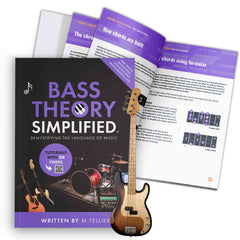
Bass Theory Simplified · Demystifying the language of music
Snap eindelijk de hals van je bas.
Stop memorizing shapes.
De meeste bassisten leren vormen uit hun hoofd. Maar weinigen snappen waarom ze werken.
Dit is het visuele systeem dat de hals van je bas van willekeurig naar vanzelfsprekend brengt — zodat je nummers kunt schrijven, bewust kunt improviseren, op gehoor kunt spelen en eindelijk begrijpt wat je speelt. Geen bladmuziek. Geen piano. Geen voorkennis van theorie nodig.
Ontgrendel het fretboard
Direct als pdf · Begin vanavond
 Verzending met track & trace naar Zwitserland · Levertijden
183
Pages
Preview · 60 sec
Een kijkje in het boek
Snelle wereldwijde verzending
VS, EU, VK, AU, CA · meestal 3–7 dagen
Verzending met track & trace
Realtime tracking bij elke bestelling
Verzekerd & veilig
Kwijt of beschadigd? Wij vervangen het gratis
Pdf direct geleverd
Vanavond nog lezen · niet wachten
The uncomfortable truth
Most bassists memorize shapes.
Very few understand music.
You can play. You know your open chords. Maybe a pentatonic scale. But you can't explain why any of it works — and that's the wall that stops most bassists from ever becoming musical.
What you have now
Memorized shapes.
You can play songs. You remember chord grips. You know a few scale boxes. But if someone asks you to play in a different key, you freeze — because you don't know why the shapes work.
- Can't transpose to a new key
- Can't write your own progressions
- Can't follow what other musicians say
What you get
The language behind them.
Once you see why a chord is built the way it is, the shapes stop being random. They become a vocabulary you can speak fluently — in any key, anywhere on the bass neck, in any musical situation.
- Move freely between any key
- Write progressions intentionally
- Speak the language of music
Read this before you blame yourself
Music theory wasn't hard.
The explanations were.
Most theory books were written by classically-trained pianists for conservatory students. They assumed you read sheet music. They used Italian terms. They asked you to memorize forty modes before you'd written a single song.
That format wasn't built for self-taught bassists who learn by seeing, hearing, and playing. The information wasn't wrong — the delivery was.
"I started in 2008 with a MIDI keyboard and FL Studio, no theory. From 2010 to 2015 I taught music production on YouTube as MellaMayne — but I still couldn't really play the bass. Years later, after my first book (Music Theory Simplified, for piano) found readers, I wrote the bass version I wish I'd had at the start."
— Melvin Tellier · Founder, Musiciangoods · Self-taught since 2008
"Theory clicks when you stop trying to memorize it
and start seeing it on the bass neck."
and start seeing it on the bass neck."
Zo leren de meeste theorieboeken het.
Sleep en ontdek een betere manier.
Sleep de schuifregelaar en zie waarom 200.000+ muzikanten kiezen voor Bas: theorie eenvoudig uitgelegd.

←Sleep de schuifregelaar→
VISUEEL LERENDiagrammen, kleuren & fretboardbeelden helpen je sneller te leren.
PRAKTISCHE FOCUSElk concept sluit direct aan op het spelen van echte muziek.
GEMAAKT VOOR BASSISTENGeschreven door een bassist, voor bassisten. Geen pianokennis nodig.
LEER MET ZELFVERTROUWENBegrijp eindelijk waarom muziek werkt en druk je vrij uit.
Inclusief QR-codes
Vast bij een concept? Gewoon scannen en kijken.
Elk hoofdstuk heeft QR-codes die direct op de pagina staan.
Geen app, geen login.
50+ videotutorials verdeeld over alle 9 hoofdstukken
Werkt op elke telefoon — geen app nodig
Dezelfde video’s werken voor pdf en paperback
Blader door het boek
Zie precies hoe het boek uitlegt.
Explore real chapters and flip through actual pages from Bass Theory Simplified.

1 / 5
Built for clarity. Designed for results.
Every chapter tells you
exactly where you're going.
No fluff. No wasted time. Each chapter is structured to help you learn faster, stay focused, and actually understand.
01
Niveau
Je weet vooraf of een hoofdstuk voor beginners, gevorderden of experts is.
02
Benodigde tijd
De meeste hoofdstukken kosten 1-3 uur, dus je leert in je eigen tempo.
03
Duidelijk resultaat
Elk hoofdstuk begint met wat je kunt als je het af hebt.
 123456
04
Wat je leert
Zie precies welke begrippen en vaardigheden het hoofdstuk behandelt.
05
Wat je nodig hebt
Geen verrassingen. Elk hoofdstuk vertelt precies welke hulpmiddelen je gebruikt.
06
Sla over als je dit al kent
Ken je het al? Spring vooruit en focus op wat je nog niet weet.
Een compleet leersysteem.
Jargongidsen. Visuele spiekbriefjes. QR-videolessen. Alles wat je nodig hebt om muziektheorie eindelijk te snappen.
JARGONGIDSEN8 jargongidsen leggen lastige muziektermen uit — één aan het eind van elk hoofdstuk.
VISUELE SPIEKBRIEFJESNaslagpagina’s met kleurcodes, waaronder het complete akkoordenschema, de modi-kaart en de kwintencirkel.
QR-VIDEOLESSENScan de QR-codes op belangrijke pagina’s en bekijk stap-voor-stap-uitleg op video.
SAMENVATTINGEN PER HOOFDSTUKKernpunten aan het eind van alle 8 hoofdstukken om te herhalen en vast te zetten wat je hebt geleerd.

What's inside the book
142 pages.
8 fundamental concepts. One connected system.
Every chapter builds on the last. Each one includes visual diagrams, a cheat sheet, a jargon guide, and a QR code linking to a video tutorial. Click any chapter to see what's inside.
01 De basis van de piano
02 De basis van de bas
Piano vs. bas — eindelijk vertaald. Hoe de snaren gestemd zijn, waarom de bashals is ingedeeld zoals hij is, en hoe elk begrip uit hoofdstuk 1 op de bashals past. De brug tussen muziektheorie en je instrument.
03 Toonsoorten & toonladders
Wat een ‘toonsoort’ eigenlijk is. De majeurtoonladder, natuurlijk mineur, majeur- & mineurpentatoniek — allemaal visueel uitgetekend over de hele basfretboard. Toonladderposities, toonladdersystemen, parallelle toonsoorten en een introductie tot de kerktoonladders. Volgens de meeste lezers het hoofdstuk waardoor de bashals eindelijk logisch werd.
04 Harmonie — intervallen & akkoorden
Het grootste hoofdstuk van het boek. Muziekintervallen, snaarintervallen, alle akkoordtypes (majeur, mineur, sus, overmatig, verminderd, dominant), hoe akkoorden op de bas zijn opgebouwd, alle akkoordformules en omkeringen. Het complete vocabulaire van harmonie — aangepast voor het lage register.
05 De kaart van de modi
Diatonische akkoorden uitgelegd. Romeinse cijfers. Trappen van de toonladder. Akkoordbewegingen in majeur en mineur. De drie legendarische schema’s: I-IV-V, I-V-vi-IV en IV-I-V-vi — de patronen achter de meeste populaire baslijnen, eindelijk ontcijferd.
06 Akkoordenschema’s
Een praktische gids voor muzieknotatie, bastabulatuur en bastabtechnieken (hammer-ons, pull-offs, slides, slaps). Sleutels, noten en nootwaarden — uitgelegd zoals bassisten ze echt gebruiken, niet zoals klassieke boeken ze onderwijzen.
07 Muzieknotatie
De hartslag van muziek. Maatsoort en metrum — 3/4, 4/4, 2/4 — en hoe ritme alles vormt, van een funkgroove tot een metalriff. Waarom de meeste bassisten denken dat ze ‘van nature ritmisch’ zijn en wat ze eigenlijk missen.
08 Ritme & maat
Het hoofdstuk dat alles samenbrengt. Voortekening, parallelle toonsoorten en onze vereenvoudigde versie van de kwintencirkel — het nuttigste schema in de muziektheorie. Aan het eind van dit hoofdstuk ben je een muzikant die muziek kan lezen.
09 De kwintencirkel
Het moment dat het klikt
Zie hoe de hals van je bas van willekeurig vanzelfsprekend wordt.
Toggle below to see the difference between how most bassists see the bass neck — and how you'll see it after the Harmony chapter.

Het fretboard voelt willekeurig.
Je leert een akkoordvorm. Dan een andere vorm. Je vergeet welke welke is.
132 losse noten om één voor één te onthouden.

Het fretboard is een patroon.
Elk akkoord is grondtoon + terts + kwint in verschillende posities.
132 noten worden één systeem dat je overal toepast.
Real readers · Real reviews
The book that finally made theory click
for thousands of self-taught bassists.

Marcus T.
After 12 years, the bass neck finally makes sense.
I've owned at least seven theory books. Every single one assumed I could already read sheet music or play piano. This one starts where I actually am — looking at a fretboard, wondering why anything works. By Chapter 4 I understood intervals for the first time in my life. The relief is hard to describe.
Jamal C.
Two weeks in and I'm writing my own progressions.
I used to write songs by stacking chords until something sounded okay. Now I actually choose chords on purpose because I understand what they'll do emotionally. The modes chapter alone unlocked five new positions on the bass neck I'd avoided for years.
Kenji T.
I can finally jam without freezing.
Someone calls a key in a jam, I used to panic and noodle around the same five frets. Now I actually know where to play and what notes work. Started picking up songs by ear last month — something I thought I'd never be able to do. This book is the cheat code I wish I'd had a decade ago.
From Shopify · Judge.me verified
Real photos from real readers.
Understood the bass neck in 2 days.
I'm not exaggerating. Chapter 4 broke down what every other book skipped.
10 years playing. Modes finally make sense.
The Keys & Scales chapter showed me modes as colors instead of seven random shapes. Mind blown.
Wrote a full song in one weekend.
The Chord Progressions chapter and the Roman numerals system is pure gold. Bought the mousepad too.
Bridged piano theory and bass in a weekend.
As a producer who only knew theory on piano roll, this book finally got me playing it on bass.
The QR videos made the modes chapter click.
Was stuck on modes for 20 minutes, scanned the code, watched the 2-min video, instant clarity. Best theory book I've bought.
I'm 56 and finally feel like I understand bass.
Wish I had this 30 years ago. The Harmony chapter alone was worth twice the price.
Finally a theory book that doesn't feel like school.
I'd given up on theory three times before this. The 'why' explanations finally clicked. Now I'm writing songs again.
I keep it on my amp every practice session.
Lives on top of my amp. Open it, scan a QR, learn one concept, jam. Repeat. Best $25 I've spent on bass.
Real customers · Real reactions
Hear it from bassists
who've been through it.
Unedited videos from readers about their experience with the book. The good, the honest, and the "I wish I'd found this sooner" moments.
"@leylasmusic geeft haar eerlijke mening"
@leylasmusicBekijk het systeem voor
"@daynabeemusic over waarom dit boek werkt"
@dangallaghermusicBekijk het systeem voor
"@martin.dalesio kraakt de bashals"
@martin.dalesioBekijk het systeem voor
"@maxveresmusic schrijft zijn eerste nummer"
@maxveresmusicBekijk het systeem voor
"@beccasmelodies snapt eindelijk theorie"
@beccasmelodiesBekijk het systeem voor
"@sjplaysmusic raadt het aan"
@sjplaysmusicBekijk het systeem voor
A complete learning system
One transformation.
Four tools.
The book teaches the framework. The companions make it stick.
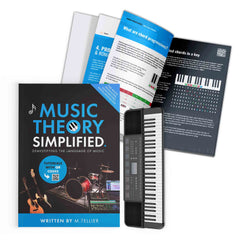
Het boek
Het raamwerk
183 pagina’s van ‘wat is een akkoord?’ tot ‘ik kan elk akkoordenschema schrijven’.
CHF 21.00
Add to cart
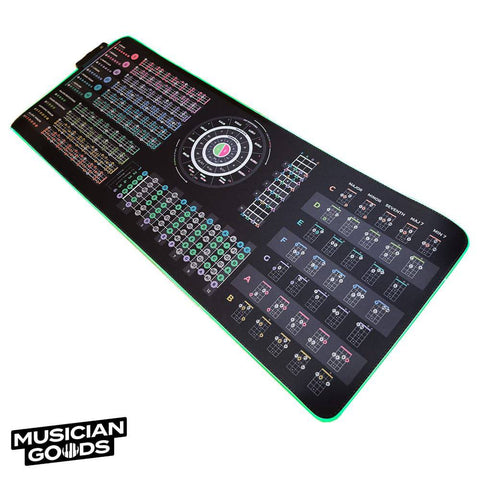
De muismat
Dagelijkse herhaling
Het spiekbriefje ligt elke dag onder je handen. Theorie wordt spiergeheugen.
CHF 24.00
Add to cart
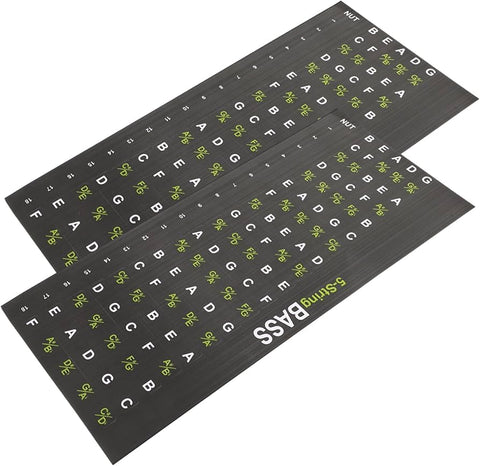
Fretboard-stickers
Visuele training
Breng het notensysteem over op je hals. Train je ogen terwijl je speelt.
CHF 10.00
Add to cart
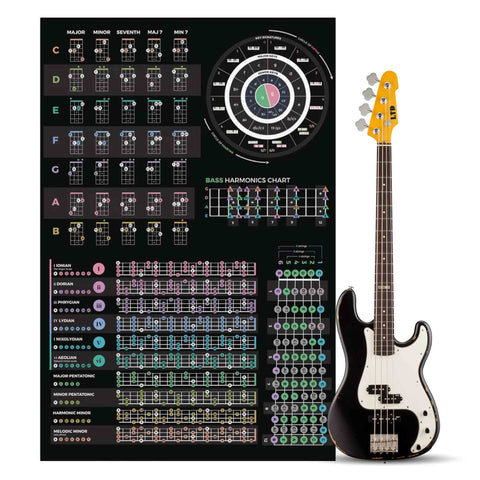
De poster
Passief leren
Toonladders, intervallen en de kaart van de modi — altijd in je ooghoek.
CHF 29.00
Add to cart
Choose your starting point
Pick your edition.
Start understanding tonight.
Bundelkorting actief — bespaar tot 20% als je hieronder extra’s toevoegt.
Kies een taal
Direct als pdf
Digital
Het boek — pdf
CHF 21.00
Direct geleverd
- 183-page PDF · all 9 chapters
- QR video tutorials included
- Searchable, any device
- 30-day refund
1
Download de pdf
Physical
Het boek — paperback
CHF 33.00
Wereldwijd verzonden met track & trace
- Full-color paperback (142pp)
- QR video tutorials included
- Worldwide tracked shipping
- 30-day refund
1
Bestel de paperback
Populairst
Print + pdf
Beste koop
Complete editie
€56.98
Bespaar €16.99 · Print + digitaal
- Full-color paperback (142pp)
- Instant PDF (read tonight)
- QR video tutorials
- Worldwide tracked shipping
- 30-day refund
1
Kies compleet
Bespaar meer als je meerdere boeken koopt
Kant-en-klare sets met meerdere boeken
Bass + Bass
Save €9.99
Vanaf CHF 32.00
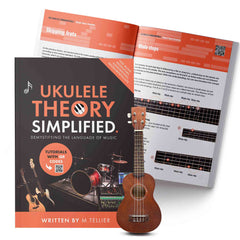
Bass + Ukulele
Save €9.99
Vanaf CHF 32.00
Beste koop
3-book bundle
Bass + Bass + Piano
Vanaf CHF 46.00
All 4 books
Bass + Bass + Piano + Ukulele
Vanaf CHF 62.00
Bundels bevatten dezelfde inhoud als de losse boeken.
30-day refund
Worldwide tracked shipping
30 dagen geld-terug-garantie.
Helpt het boek je niet om theorie eindelijk te snappen? Mail ons binnen 30 dagen. Je krijgt elke cent terug — zonder vragen.
Gratis cadeaus bij €35 & €55
Bundel & bespaar tot 25%
Accessories for your Bass Theory book.
64% of readers added at least one. Bundle & save up to 25% — plus unlock free gifts at €35 and €55.
The transformation
From confusion
to fluency.
This isn't about adding more information. It's about how you experience the bass from this point forward.
Before
- Memorizing chord shapes
- Stuck in two positions on the bass neck
- Noodling without direction
- Confused when musicians talk theory
- Writing progressions that "sort of work"
- Freezing when someone calls a key
After
- Writing songs that actually sound the way you want
- Playing songs by ear instead of hunting for tabs
- Improvising with intention, not luck
- Learning new songs faster by recognizing patterns
- Jamming confidently in any key, anywhere on the bass neck
- Finally understanding what you're playing — and why
What makes this different from free YouTube tutorials?
YouTube teaches isolated tricks. This teaches a connected system.
I'm a complete beginner. Is this too advanced for me?
No. The book starts with zero assumptions.
I've tried theory before and it always felt overwhelming. Why will this be different?
Because most theory is taught as abstract concepts on paper.
Do I need to read sheet music or know piano?
No. Everything is taught visually on the bass fretboard.
Does it work for acoustic and electric?
Yes. The fretboard layout is identical.
What if it doesn't help me?
30-day full refund.
What's the difference between the PDF and the paperback?
Content is identical. The PDF is instant; the paperback ships.
How long does shipping take?
Most orders ship within 1–2 business days.
How do the QR codes work? Do I need internet?
Open your phone's camera, point at the code, watch.
I play left-handed / 7-string / drop tunings — does it still work?
Yes. Music theory is the same regardless.
How long does it take to finish the book?
No rush. Most readers take 8–15 hours cover-to-cover.
Can I get this if I'm in the EU? VAT & customs?
Yes — we ship worldwide. VAT included at checkout.
Part of the Theory Simplified series
The same method, refined across five instruments.
Built on the same visual, plain-English approach that made Music Theory Simplified (the piano edition) a hit. Each book is independent — pick the one for your instrument.
Stop met vormen stampen. Ga muziek begrijpen.
Een visueel systeem voor bassisten die zichzelf lesgeven.