4,8/5 na Trustpilot

Wzór 12 dźwięków, nazwy nut, całe tony & półtony — najpierw na klawiaturze pianina, bo tam teorię muzyki najłatwiej zobaczyć. Pomiń ten rozdział, jeśli już grasz na pianinie. Większość basistów nie gra — a ten jeden rozdział otwiera drogę do całej reszty książki.
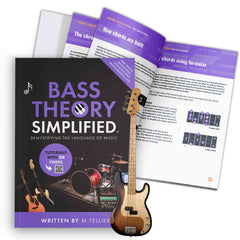
Bass Theory Simplified · Demystifying the language of music
Wreszcie zrozum gryf basu.
Stop memorizing shapes.
Większość basistów wkuwa kształty. Niewielu rozumie, dlaczego działają.
To wizualny system, dzięki któremu gryf basu z przypadkowego staje się oczywisty — możesz pisać piosenki, improwizować świadomie, grać ze słuchu i wreszcie rozumieć, co grasz. Bez nut. Bez pianina. Bez wcześniejszej teorii.
Odblokuj gryf
PDF od ręki · Zacznij jeszcze dziś
 Przesyłka ze śledzeniem – Kanada · Czas dostawy
183
Pages
Podgląd · 60 s
Zajrzyj do środka
Szybka wysyłka na cały świat
USA, UE, Wielka Brytania, Australia, Kanada · zwykle 3–7 dni
Przesyłka ze śledzeniem
Śledzenie w czasie rzeczywistym przy każdym zamówieniu
Ubezpieczona & bezpieczna
Zgubiona lub uszkodzona? Wymienimy za darmo
PDF od ręki
Czytaj jeszcze dziś · bez czekania
The uncomfortable truth
Most bassists memorize shapes.
Very few understand music.
You can play. You know your open chords. Maybe a pentatonic scale. But you can't explain why any of it works — and that's the wall that stops most bassists from ever becoming musical.
What you have now
Memorized shapes.
You can play songs. You remember chord grips. You know a few scale boxes. But if someone asks you to play in a different key, you freeze — because you don't know why the shapes work.
- Can't transpose to a new key
- Can't write your own progressions
- Can't follow what other musicians say
What you get
The language behind them.
Once you see why a chord is built the way it is, the shapes stop being random. They become a vocabulary you can speak fluently — in any key, anywhere on the bass neck, in any musical situation.
- Move freely between any key
- Write progressions intentionally
- Speak the language of music
Read this before you blame yourself
Music theory wasn't hard.
The explanations were.
Most theory books were written by classically-trained pianists for conservatory students. They assumed you read sheet music. They used Italian terms. They asked you to memorize forty modes before you'd written a single song.
That format wasn't built for self-taught bassists who learn by seeing, hearing, and playing. The information wasn't wrong — the delivery was.
"I started in 2008 with a MIDI keyboard and FL Studio, no theory. From 2010 to 2015 I taught music production on YouTube as MellaMayne — but I still couldn't really play the bass. Years later, after my first book (Music Theory Simplified, for piano) found readers, I wrote the bass version I wish I'd had at the start."
— Melvin Tellier · Founder, Musiciangoods · Self-taught since 2008
"Theory clicks when you stop trying to memorize it
and start seeing it on the bass neck."
and start seeing it on the bass neck."
Tak uczy większość podręczników teorii.
Przeciągnij, by odkryć lepszy sposób.
Przeciągnij suwak i zobacz, dlaczego ponad 200 000 muzyków wybiera „Bas: teoria w prostym wydaniu”.

←Przeciągnij suwak→
NAUKA WZROKOWADiagramy, kolory & grafiki gryfu pomagają uczyć się szybciej.
NACISK NA PRAKTYKĘKażde pojęcie łączy się bezpośrednio z graniem prawdziwej muzyki.
DLA BASISTÓWNapisana przez basistę dla basistów. Znajomość pianina niepotrzebna.
UCZ SIĘ PEWNIEWreszcie zrozum, dlaczego muzyka działa, i wyrażaj się swobodnie.
Kody QR w zestawie
Utknąłeś na jakimś pojęciu? Zeskanuj i oglądaj.
Każdy rozdział ma kody QR wydrukowane prosto na stronie.
Bez aplikacji, bez logowania.
Ponad 50 lekcji wideo we wszystkich 9 rozdziałach
Działa na każdym telefonie — bez aplikacji
Te same filmy działają z PDF-em i wersją drukowaną
Przekartkuj książkę
Zobacz, jak dokładnie uczy ta książka.
Explore real chapters and flip through actual pages from Bass Theory Simplified.

1 / 5
Built for clarity. Designed for results.
Every chapter tells you
exactly where you're going.
No fluff. No wasted time. Each chapter is structured to help you learn faster, stay focused, and actually understand.
01
Poziom
Zanim zaczniesz, wiesz, czy rozdział jest dla początkujących, średniozaawansowanych czy zaawansowanych.
02
Potrzebny czas
Większość rozdziałów zajmuje 1–3 godziny, więc uczysz się we własnym tempie.
03
Jasny cel
Każdy rozdział zaczyna się od tego, co będziesz umieć po jego ukończeniu.
 123456
04
Czego się nauczysz
Zobacz dokładnie, jakie pojęcia i umiejętności obejmuje rozdział.
05
Czego potrzebujesz
Bez niespodzianek. Każdy rozdział mówi dokładnie, z jakich narzędzi skorzystasz.
06
Pomiń, jeśli to znasz
Już to znasz? Przeskocz dalej i skup się na tym, czego jeszcze nie wiesz.
Kompletny system nauki.
Słowniczki żargonu. Wizualne ściągi. Lekcje wideo przez QR. Wszystko, czego potrzebujesz, by wreszcie zrozumieć teorię muzyki.
SŁOWNICZKI ŻARGONU8 słowniczków objaśnia trudne terminy muzyczne — po jednym na końcu każdego rozdziału.
WIZUALNE ŚCIĄGIKolorowe strony referencyjne, w tym pełna tabela akordów, mapa skal modalnych i koło kwintowe.
LEKCJE WIDEO PRZEZ QRZeskanuj kody QR na kluczowych stronach i obejrzyj wyjaśnienia wideo krok po kroku.
PODSUMOWANIA ROZDZIAŁÓWNajważniejsze wnioski na końcu każdego z 8 rozdziałów, by powtórzyć i utrwalić to, czego się nauczyłeś.

What's inside the book
142 pages.
8 fundamental concepts. One connected system.
Every chapter builds on the last. Each one includes visual diagrams, a cheat sheet, a jargon guide, and a QR code linking to a video tutorial. Click any chapter to see what's inside.
01 Podstawy pianina
02 Podstawy basu
Pianino a bas — wreszcie przetłumaczone. Jak nastrojone są struny, dlaczego gryf basu jest zbudowany tak, a nie inaczej, i jak każde pojęcie z rozdziału 1 przekłada się na gryf basu. Pomost między teorią muzyki a twoim instrumentem.
03 Tonacje i skale
Czym tak naprawdę jest „tonacja”. Skala durowa, naturalna molowa, pentatonika durowa & molowa — wszystko rozrysowane na całym gryfie basu. Pozycje skal, systemy skal, tonacje równoległe i wprowadzenie do skal modalnych. Według większości czytelników to właśnie ten rozdział sprawił, że gryf basu wreszcie nabrał sensu.
04 Harmonia — interwały i akordy
Największy rozdział w książce. Interwały muzyczne, interwały na strunach, wszystkie rodzaje akordów (durowe, molowe, sus, zwiększone, zmniejszone, dominantowe), budowa akordów na basie, wszystkie wzory akordów i przewroty. Kompletne słownictwo harmonii — dopasowane do niskich częstotliwości.
05 Mapa skal modalnych
Akordy diatoniczne wyjaśnione. Cyfry rzymskie. Stopnie skali. Ruchy akordów w tonacjach durowych i molowych. Trzy legendarne progresje: I-IV-V, I-V-vi-IV i IV-I-V-vi — schematy stojące za większością popularnych linii basowych, wreszcie rozszyfrowane.
06 Progresje akordów
Praktyczny przewodnik po notacji muzycznej, tabulaturze basowej i technikach z tabów (hammer-on, pull-off, slide, slap). Klucze, nuty i wartości rytmiczne — wyjaśnione tak, jak naprawdę używają ich basiści, a nie tak, jak uczą klasyczne podręczniki.
07 Notacja muzyczna
Puls muzyki. Metrum. Oznaczenia taktu — 3/4, 4/4, 2/4 — i to, jak rytm kształtuje wszystko, od funkowego groove’u po metalowy riff. Dlaczego większość basistów zakłada, że ma „naturalne wyczucie rytmu”, i czego tak naprawdę im brakuje.
08 Rytm i metrum
Rozdział, który spina wszystko w całość. Znaki przykluczowe, tonacje równoległe i nasza uproszczona wersja koła kwintowego — najprzydatniejszego diagramu w teorii muzyki. Pod koniec tego rozdziału jesteś muzykiem, który rozumie, co gra.
09 Koło kwintowe
Moment, w którym wszystko zaskakuje
Zobacz, jak gryf basu z przypadkowego staje się oczywisty.
Toggle below to see the difference between how most bassists see the bass neck — and how you'll see it after the Harmony chapter.

Gryf wydaje się przypadkowy.
Uczysz się jednego chwytu. Potem innego. Zapominasz, który jest który.
132 niepowiązane dźwięki do wkucia jeden po drugim.

Gryf to wzór.
Każdy akord to pryma + tercja + kwinta w różnych pozycjach.
132 dźwięki stają się jednym systemem, który stosujesz wszędzie.
Real readers · Real reviews
The book that finally made theory click
for thousands of self-taught bassists.

Marcus T.
After 12 years, the bass neck finally makes sense.
I've owned at least seven theory books. Every single one assumed I could already read sheet music or play piano. This one starts where I actually am — looking at a fretboard, wondering why anything works. By Chapter 4 I understood intervals for the first time in my life. The relief is hard to describe.
Jamal C.
Two weeks in and I'm writing my own progressions.
I used to write songs by stacking chords until something sounded okay. Now I actually choose chords on purpose because I understand what they'll do emotionally. The modes chapter alone unlocked five new positions on the bass neck I'd avoided for years.
Kenji T.
I can finally jam without freezing.
Someone calls a key in a jam, I used to panic and noodle around the same five frets. Now I actually know where to play and what notes work. Started picking up songs by ear last month — something I thought I'd never be able to do. This book is the cheat code I wish I'd had a decade ago.
From Shopify · Judge.me verified
Real photos from real readers.
Understood the bass neck in 2 days.
I'm not exaggerating. Chapter 4 broke down what every other book skipped.
10 years playing. Modes finally make sense.
The Keys & Scales chapter showed me modes as colors instead of seven random shapes. Mind blown.
Wrote a full song in one weekend.
The Chord Progressions chapter and the Roman numerals system is pure gold. Bought the mousepad too.
Bridged piano theory and bass in a weekend.
As a producer who only knew theory on piano roll, this book finally got me playing it on bass.
The QR videos made the modes chapter click.
Was stuck on modes for 20 minutes, scanned the code, watched the 2-min video, instant clarity. Best theory book I've bought.
I'm 56 and finally feel like I understand bass.
Wish I had this 30 years ago. The Harmony chapter alone was worth twice the price.
Finally a theory book that doesn't feel like school.
I'd given up on theory three times before this. The 'why' explanations finally clicked. Now I'm writing songs again.
I keep it on my amp every practice session.
Lives on top of my amp. Open it, scan a QR, learn one concept, jam. Repeat. Best $25 I've spent on bass.
Real customers · Real reactions
Hear it from bassists
who've been through it.
Unedited videos from readers about their experience with the book. The good, the honest, and the "I wish I'd found this sooner" moments.
"@leylasmusic szczerze o książce"
@leylasmusicZobacz
"@daynabeemusic o tym, dlaczego ta książka działa"
@dangallaghermusicZobacz
"@martin.dalesio rozgryza gryf basu"
@martin.dalesioZobacz
"@maxveresmusic pisze swoją pierwszą piosenkę"
@maxveresmusicZobacz
"@beccasmelodies wreszcie rozumie teorię"
@beccasmelodiesZobacz
"@sjplaysmusic poleca"
@sjplaysmusicZobacz
A complete learning system
One transformation.
Four tools.
The book teaches the framework. The companions make it stick.
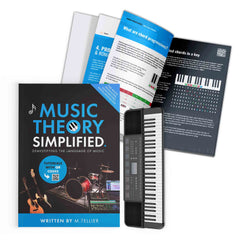
Książka
Fundament
183 strony od „co to jest akord?” do „potrafię napisać każdą progresję”.
$36.00
Add to cart
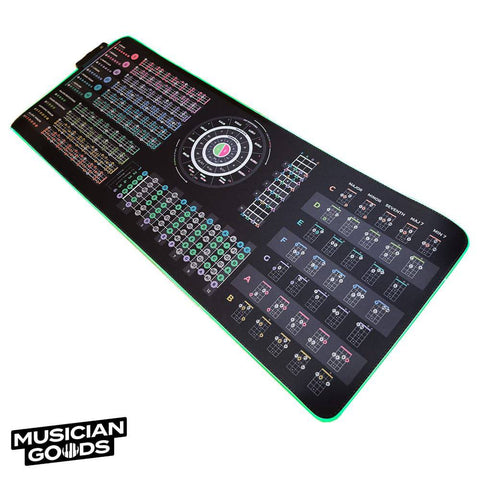
Podkładka
Codzienne utrwalanie
Ściąga leży pod twoimi dłońmi każdego dnia. Teoria staje się pamięcią mięśniową.
$40.00
Add to cart
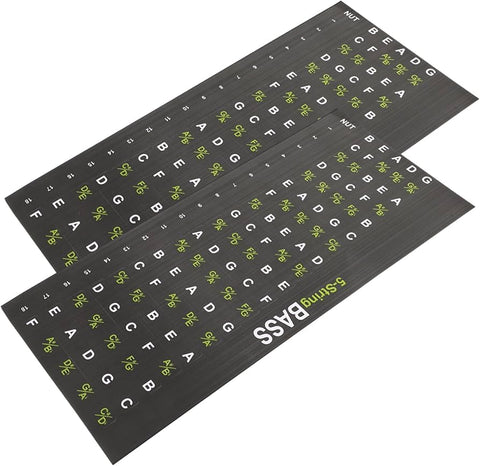
Naklejki na gryf
Trening wzrokowy
Przenieś system nut na swój gryf. Ćwicz oko podczas gry.
$16.00
Add to cart
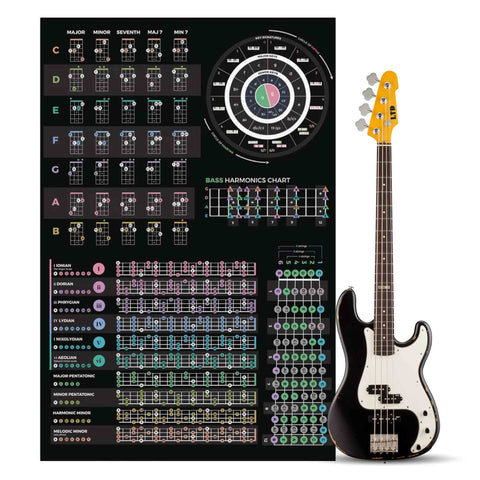
Plakat na ścianę
Nauka mimochodem
Skale, interwały i mapa skal modalnych — zawsze w zasięgu wzroku.
$48.00
Add to cart
Choose your starting point
Pick your edition.
Start understanding tonight.
Rabat pakietowy aktywny — oszczędź do 20%, dodając dodatki poniżej.
Wybierz język
PDF od ręki
Digital
Książka — PDF
$36.00
Natychmiastowa dostawa
- 183-page PDF · all 9 chapters
- QR video tutorials included
- Searchable, any device
- 30-day refund
1
Wybieram PDF
Physical
Książka — wersja drukowana
Wysyłka ze śledzeniem na cały świat
- Full-color paperback (142pp)
- QR video tutorials included
- Worldwide tracked shipping
- 30-day refund
1
Wybieram wersję drukowaną
Najpopularniejsze
Druk + PDF
Najlepsza cena
Wydanie kompletne
€56.98
Oszczędzasz 16,99 € · Druk + wersja cyfrowa
- Full-color paperback (142pp)
- Instant PDF (read tonight)
- QR video tutorials
- Worldwide tracked shipping
- 30-day refund
1
Wybieram kompletne
Oszczędzaj więcej, kupując kilka książek
Gotowe zestawy kilku książek
Bass + Bass
Save €9.99
Od $53.00
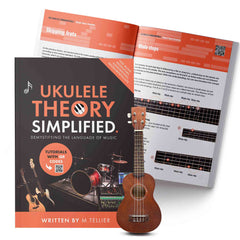
Bass + Ukulele
Save €9.99
Od $53.00
Najlepsza cena
3-book bundle
Bass + Bass + Piano
Od $77.00
All 4 books
Bass + Bass + Piano + Ukulele
Od $104.00
Pakiety zawierają te same treści co pojedyncze książki.
30-day refund
Worldwide tracked shipping
30-dniowa gwarancja zwrotu pieniędzy.
Jeśli dzięki książce teoria wreszcie nie nabierze sensu, napisz do nas w ciągu 30 dni. Zwrócimy każdy grosz — bez zbędnych pytań.
Prezenty odblokujesz od €35 & €55
Kup w pakiecie & oszczędź do 25%
Accessories for your Bass Theory book.
64% of readers added at least one. Bundle & save up to 25% — plus unlock free gifts at €35 and €55.
The transformation
From confusion
to fluency.
This isn't about adding more information. It's about how you experience the bass from this point forward.
Before
- Memorizing chord shapes
- Stuck in two positions on the bass neck
- Noodling without direction
- Confused when musicians talk theory
- Writing progressions that "sort of work"
- Freezing when someone calls a key
After
- Writing songs that actually sound the way you want
- Playing songs by ear instead of hunting for tabs
- Improvising with intention, not luck
- Learning new songs faster by recognizing patterns
- Jamming confidently in any key, anywhere on the bass neck
- Finally understanding what you're playing — and why
Questions
Najczęściej zadawane pytania
Still wondering something? Contact us and we’ll get back to you fast.
What makes this different from free YouTube tutorials?
YouTube teaches isolated tricks. This teaches a connected system.
I'm a complete beginner. Is this too advanced for me?
No. The book starts with zero assumptions.
I've tried theory before and it always felt overwhelming. Why will this be different?
Because most theory is taught as abstract concepts on paper.
Do I need to read sheet music or know piano?
No. Everything is taught visually on the bass fretboard.
Does it work for acoustic and electric?
Yes. The fretboard layout is identical.
What if it doesn't help me?
30-day full refund.
What's the difference between the PDF and the paperback?
Content is identical. The PDF is instant; the paperback ships.
How long does shipping take?
Most orders ship within 1–2 business days.
How do the QR codes work? Do I need internet?
Open your phone's camera, point at the code, watch.
I play left-handed / 7-string / drop tunings — does it still work?
Yes. Music theory is the same regardless.
How long does it take to finish the book?
No rush. Most readers take 8–15 hours cover-to-cover.
Can I get this if I'm in the EU? VAT & customs?
Yes — we ship worldwide. VAT included at checkout.
Part of the Theory Simplified series
The same method, refined across five instruments.
Built on the same visual, plain-English approach that made Music Theory Simplified (the piano edition) a hit. Each book is independent — pick the one for your instrument.
Przestań wkuwać chwyty. Zacznij rozumieć muzykę.
Wizualny system stworzony dla basistów samouków.