4,8/5 no Trustpilot

O padrão das doze teclas, os nomes das notas, tons e meios-tons — ensinados no teclado do piano, onde a teoria musical se vê melhor. Este capítulo é a base sobre a qual se constrói tudo o resto.
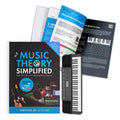
Music Theory Simplified · Demystifying the language of music
Percebe finalmente a teoria musical.
Stop guessing.
A maioria das pessoas decora músicas. Muito poucas percebem porque funcionam.
Este é o sistema visual que transforma a teoria musical de aleatória em óbvia — para escreveres músicas, improvisares com intenção, tocares de ouvido e finalmente perceberes o que estás a tocar. Ensinada no teclado, aplica-se a qualquer instrumento. Sem teoria prévia.
Desbloqueia a teoria musical
PDF imediato · Começa hoje à noite
 Envio com seguimento para Polónia · Prazos de entrega
120
Pages
Pré-visualização · 60 s
Dentro do livro
Envio rápido para todo o mundo
EUA, UE, Reino Unido, Austrália, Canadá · normalmente 3–7 dias
Entrega com seguimento
Seguimento em tempo real em todas as encomendas
Seguro & protegido
Perdeu-se ou chegou danificado? Substituímos de graça
Entrega imediata do PDF
Lê hoje à noite · sem esperas
The uncomfortable truth
Most people memorize songs.
Very few understand music.
You can play a few songs. Maybe some chords you found online. But you can't explain why any of it works — and that's the wall that stops most self-taught musicians from ever becoming truly musical.
What you have now
Memorized shapes.
You can play songs. You remember chord shapes. You know a few scales. But if someone asks you to play in a different key, you freeze — because you don't know why the shapes work.
- Can't transpose to a new key
- Can't write your own progressions
- Can't follow what other musicians say
What you get
The language behind them.
Once you see why a chord is built the way it is, the shapes stop being random. They become a vocabulary you can speak fluently — in any key, across the whole keyboard, in any musical situation.
- Move freely between any key
- Write progressions intentionally
- Speak the language of music
Read this before you blame yourself
Music theory wasn't hard.
The explanations were.
Most theory books were written by classically-trained pianists for conservatory students. They assumed you read sheet music. They used Italian terms. They asked you to memorize forty modes before you'd written a single song.
That format wasn't built for self-taught musicians and producers who learn by seeing, hearing, and playing. The information wasn't wrong — the delivery was.
"I started in 2008 with a MIDI keyboard and FL Studio, no theory. From 2010 to 2015 I taught music production on YouTube as MellaMayne — but every theory book I opened was written for conservatory students, not self-taught producers. So I wrote the book I wish I'd had at the start: Music Theory Simplified — the whole language of music, explained visually on the piano."
— Melvin Tellier · Founder, Musiciangoods · Self-taught since 2008
"Theory clicks when you stop trying to memorize it
and start seeing it on the keyboard."
and start seeing it on the keyboard."
A maioria dos livros de teoria ensina assim.
Arrasta para descobrir uma forma melhor.
Arrasta o cursor para veres porque é que mais de 200.000 músicos preferem Teoria musical simplificada.

←Arrasta o cursor→
APRENDIZAGEM VISUALDiagramas, cores & visuais do teclado ajudam-te a aprender mais depressa.
FOCO PRÁTICOCada conceito liga-se diretamente a tocar música a sério.
FEITO PARA PRINCIPIANTESEscrito para músicos autodidatas. Não precisas de saber teoria nenhuma.
APRENDE COM CONFIANÇAPercebe finalmente porque é que a música funciona e exprime-te à vontade.
Códigos QR incluídos
Encravaste num conceito? É só ler o código e ver.
Cada capítulo tem códigos QR impressos na própria página. Abre a câmara do telemóvel, lê o código e vê logo um pequeno vídeo-tutorial em que o Melvin te explica o conceito em pessoa.
Sem app, sem login.
Mais de 50 vídeo-tutoriais nos 7 capítulos
Funciona em qualquer telemóvel — sem app
Os mesmos vídeos servem para PDF e livro impresso

Folheia o livro
Vê exatamente como o livro ensina.
Explore real chapters and flip through actual pages from Music Theory Simplified.

1 / 5
Built for clarity. Designed for results.
Every chapter tells you
exactly where you're going.
No fluff. No wasted time. Each chapter is structured to help you learn faster, stay focused, and actually understand.
01
Nível
Sabes se um capítulo é para principiantes, intermédio ou avançado antes de começares.
02
Tempo necessário
A maioria dos capítulos leva 1-3 horas, por isso aprendes ao teu ritmo.
03
Resultado claro
Cada capítulo começa por te dizer o que vais conseguir fazer no fim.
 123456
04
O que vais aprender
Vê exatamente que conceitos e competências o capítulo aborda.
05
O que vais precisar
Sem surpresas: cada capítulo diz-te exatamente que ferramentas vais usar.
06
Salta se já sabes isto
Já conheces? Avança e concentra-te no que ainda não sabes.
Um sistema de aprendizagem completo.
Guias de jargão. Cábulas visuais. Vídeo-aulas por QR. Tudo o que precisas para finalmente perceber teoria musical.
GUIAS DE JARGÃO7 guias de jargão explicam termos musicais complexos — um no fim de cada capítulo.
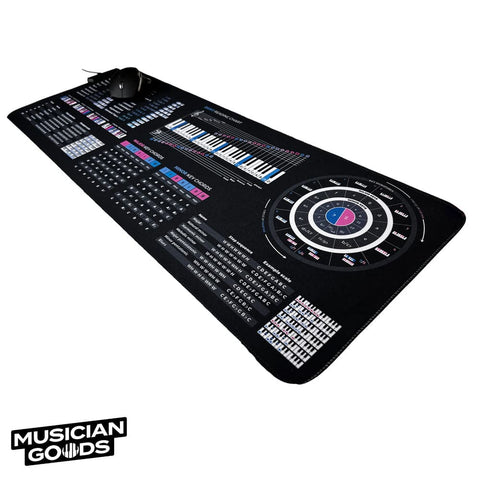
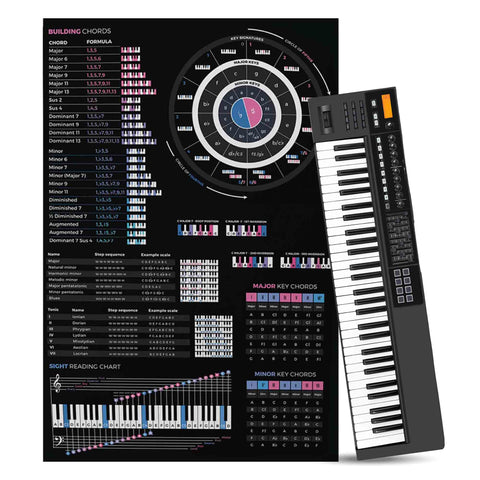
CÁBULAS VISUAISPáginas de referência com código de cores, incluindo a tabela completa de acordes, o mapa dos modos e o círculo de quintas.
VÍDEO-AULAS POR QRLê os códigos QR nas páginas principais para veres explicações em vídeo passo a passo.
RESUMOS DOS CAPÍTULOSPontos-chave no fim dos 7 capítulos para reveres e fixares o que aprendeste.

What's inside the book
120 pages.
7 fundamental concepts. One connected system.
Every chapter builds on the last. Each one includes visual diagrams, a cheat sheet, a jargon guide, and a QR code linking to a video tutorial. Click any chapter to see what's inside.
01 Os fundamentos do piano
02 Compor: tonalidades e escalas
O que é realmente uma "tonalidade". A escala maior, a escala menor natural, as tonalidades relativas e uma introdução aos modos musicais — tudo mapeado visualmente, mais uma tabela completa de escalas no piano. O capítulo que finalmente dá sentido às escalas.
03 Harmonia: guia de acordes
O maior capítulo do livro. Intervalos musicais, todos os tipos de acordes, tríades e acordes de sétima, todas as fórmulas, inversões e voicings — mais uma tabela completa de acordes no piano. O vocabulário completo da harmonia.
04 Progressões de acordes
Acordes diatónicos explicados. Numeração romana, acordes em tonalidade menor e graus da escala. As três progressões lendárias — I-IV-V, I-V-vi-IV e IV-I-V-vi — os padrões por trás da maior parte da música popular, finalmente decifrados.
05 Notação musical
Aprende a ler música. Claves, valores das notas, notas ligadas e pontuadas — o essencial da notação padrão, explicado de forma simples e sem o jargão de conservatório.
06 Ritmo e tempo
O batimento cardíaco da música. A grelha rítmica, tempos fortes e fracos e a métrica musical — compassos como 3/4, 4/4 e 2/4 — e como o ritmo molda tudo, de uma balada a uma faixa de dança.
07 O ciclo das quintas
O capítulo que junta tudo. Armações de clave, tonalidades com sustenidos e bemóis, tonalidades sobrepostas e relativas e o nosso ciclo das quintas simplificado — o diagrama mais útil da música. No fim, lês música com fluência.
O momento em que tudo faz clique
Vê o teclado passar de aleatório a óbvio.
Toggle below to see the difference between how most beginners see the keyboard — and how you'll see it after the Harmony chapter.

A teoria parece aleatória.
Aprendes um acorde. Depois uma escala. Depois uma armação de clave. Cada coisa parece uma regra à parte para decorar. Esqueces-te qual é qual e ficas encravado, sempre a adivinhar.
Dezenas de regras soltas para decorar uma a uma.

É tudo um só padrão.
Cada acorde é uma fundamental + 3.ª + 5.ª. Cada tonalidade segue a mesma fórmula. Quando vês como os intervalos se ligam no teclado, consegues construir qualquer acorde, em qualquer tonalidade.
Dezenas de regras tornam-se um único sistema que aplicas em todo o lado.
Real readers · Real reviews
The book that finally made theory click
for thousands of self-taught musicians.

Liam H.
After 12 years, music theory finally makes sense.
I've owned at least seven theory books. Every single one assumed I could already read sheet music. This one starts where I actually am — looking at a keyboard, wondering why anything works. By the Harmony chapter I understood intervals for the first time in my life. The relief is hard to describe.
Chloe D.
Two weeks in and I'm writing my own progressions.
I used to write songs by stacking chords until something sounded okay. Now I actually choose chords on purpose because I understand what they'll do emotionally. The Chord Progressions chapter alone unlocked patterns I'd avoided for years.
Andre P.
I can finally play without freezing.
Someone calls a key, I used to panic and stick to the same few notes. Now I actually know what notes work and why. Started picking up songs by ear last month — something I thought I'd never be able to do. This book is the cheat code I wish I'd had a decade ago.
From Shopify · Judge.me verified
Real photos from real readers.
Understood the keyboard in 2 days.
I'm not exaggerating. The Harmony chapter broke down what every other book skipped.
10 years playing. Scales finally make sense.
The Keys & Scales chapter showed me scales as patterns instead of random notes. Mind blown.
Best gift I've ever given my son.
Three weeks later he's writing his own songs and explaining theory to me. The QR videos are gold.
Wrote a full song in one weekend.
The Chord Progressions chapter and the Roman numerals system is pure gold. Bought the mousepad too.
Bridged my ear and the theory in a weekend.
As a producer who only knew the piano roll, this book finally connected the sounds to the theory.
The QR videos made the chords chapter click.
Was stuck on chord building for 20 minutes, scanned the code, watched the 2-min video, instant clarity. Best theory book I've bought.
I'm 56 and finally feel like I understand music.
Wish I had this 30 years ago. The Harmony chapter alone was worth twice the price.
Finally a theory book that doesn't feel like school.
I'd given up on theory three times before this. The 'why' explanations finally clicked. Now I'm writing songs again.
I keep it on my piano every practice session.
Lives on my piano. Open it, scan a QR, learn one concept, play. Repeat. Best $25 I've spent on music.
Mi nueva biblia de teoría.
Por fin un libro de teoría que entiendo. Los códigos QR con los videos de Melvin son oro puro.
Worth every cent of the investment.
Clear writing, no fluff, immediately useful. The Circle of Fifths finally clicked after years of trying.
Wish someone gave me this 10 years ago.
I'm a self-taught player and theory always felt out of reach. This book made scales feel obvious.
Real customers · Real reactions
Hear it from musicians
who've been through it.
Unedited videos from readers about their experience with the book. The good, the honest, and the "I wish I'd found this sooner" moments.
"@leylasmusic dá a sua opinião sincera"
@leylasmusicVer sistema
"@daynabeemusic explica porque este livro funciona"
@daynabeemusicVer sistema
"@martin.dalesio desvenda a teoria musical"
@martin.dalesioVer sistema
"@maxveresmusic escreve a sua primeira canção"
@maxveresmusicVer sistema
"@beccasmelodies finalmente percebe a teoria"
@beccasmelodiesVer sistema
"@sjplaysmusic recomenda-o"
@sjplaysmusicVer sistema
A complete learning system
One transformation.
Four tools.
The book teaches the framework. The companions make it stick.
O livro
A estrutura
120 páginas de "o que é um acorde?" até "consigo escrever qualquer progressão."
100,00 zł
Add to cart
O tapete de rato
Reforço diário
A cábula está debaixo das tuas mãos todos os dias. A teoria torna-se memória muscular.
127,00 zł
Add to cart
Autocolantes para piano
Treino visual
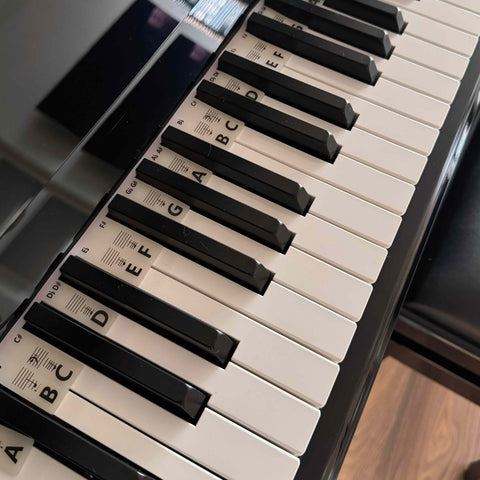
Identifica cada tecla com autocolantes de notas removíveis. Treina os olhos enquanto tocas.
55,00 zł
Add to cart
O poster de parede
Aprendizagem passiva
Escalas, intervalos e o ciclo das quintas — sempre no teu campo de visão.
127,00 zł
Add to cart
Choose your starting point
Pick your edition.
Start understanding tonight.
Poupa até 20% com o nosso desconto de volume — quanto mais juntas, mais poupas.
Escolher idioma
PDF imediato
Digital
O livro — PDF + EPUB
100,00 zł
Entrega imediata · PDF + EPUB
- 120-page PDF + EPUB · all 7 chapters
- QR video tutorials included
- Open on Kindle, iPad, Apple Books, anywhere
- 30-day refund
1
Quero o PDF
Physical
O livro — impresso
Envio com seguimento para todo o mundo
- Full-color paperback (120pp)
- QR video tutorials included
- Worldwide tracked shipping
- 30-day refund
1
Quero o livro impresso
O mais popular
Impresso + PDF
Melhor preço
Edição completa
€56.98
Poupa 16,99 € · Impresso + digital
- Full-color paperback (120pp)
- Instant PDF + EPUB (read tonight)
- QR video tutorials
- Worldwide tracked shipping
- 30-day refund
1
Quero a completa
Poupa mais ao comprar vários livros
Packs de vários livros já montados abaixo — e ainda descontos de quantidade automáticos em qualquer combinação.
Piano + Ukulele
Piano + Ukulele
Desde 149,00 zł
3-book bundle
Guitar + Bass + Piano
Desde 217,00 zł
Melhor preço
All 4 books
Guitar + Bass + Piano + Ukulele
Desde 293,00 zł
Book + Cheat Sheet
Book + mousepad cheat sheet
Desde 262,00 zł
Os packs têm o mesmo conteúdo que os livros individuais.
30-day refund
Worldwide tracked shipping
Garantia de reembolso de 30 dias.
Se o livro não te ajudar a perceber finalmente a teoria, manda-nos um email nos 30 dias seguintes. Devolvemos-te tudo — sem perguntas.
Ofertas desbloqueadas a partir de €35 & €55
Junta em pack & poupa até 25%
Accessories for your Music Theory book.
64% of readers added at least one. Bundle & save up to 25% — plus unlock free gifts at €35 and €55.
The transformation
From confusion
to fluency.
This isn't about adding more information. It's about how you experience music from this point forward.
Before
- Memorizing chord shapes
- Stuck playing the same few chords
- Noodling without direction
- Confused when musicians talk theory
- Writing progressions that "sort of work"
- Freezing when someone calls a key
After
- Writing songs that actually sound the way you want
- Playing songs by ear instead of hunting for tabs
- Improvising with intention, not luck
- Learning new songs faster by recognizing patterns
- Jamming confidently in any key, across the whole keyboard
- Finally understanding what you're playing — and why
What makes this different from free YouTube tutorials?
YouTube teaches isolated tricks. This teaches a connected system. Most free tutorials assume you already understand something the previous one didn't teach — so concepts never compound. This book gives you the framework that ties them together, in order, so each chapter builds on the last.
I'm a complete beginner. Is this too advanced for me?
No. The book starts with zero assumptions. Chapter 1 begins with the keyboard, note names and the music alphabet. Each chapter builds on the last. Most beginners report concepts clicking within the first week.
I've tried theory before and it always felt overwhelming. Why will this be different?
Because most theory is taught as abstract concepts on paper. This book teaches everything visually on the piano keyboard — where music theory is easiest to see. That's why readers say it finally clicks where other books didn't.
Do I need to read sheet music already?
No. You'll learn to read music inside the book — the Notation chapter covers it from scratch. Nothing is assumed. Everything starts at the beginning.
Does it work for my instrument, not just piano?
Yes. The theory in this book — scales, chords, progressions, rhythm, the circle of fifths — is universal. It's taught on the piano because that's where it's clearest to see, then it applies to any instrument you play.
What if it doesn't help me?
30-day full refund. No forms, no friction, no "tell us why." If theory still feels confusing after 30 days, we refund you and you keep what you've learned.
What's the difference between the PDF and the paperback?
Content is identical — same 120 pages, same QR videos. The PDF arrives instantly by email and is searchable on any device. The paperback is a full-color print edition shipped to your door. The Complete Edition tier includes both.
How long does shipping take?
Physical orders are processed within 1–3 business days. Delivery estimates vary by destination and shipping service; see our Shipping Policy for current timings. You'll get a tracking link by email as soon as your order leaves our warehouse. PDF orders are instant — delivered to your inbox within minutes of checkout.
How do the QR codes work? Do I need internet?
Each chapter has QR codes printed on the page. Open your phone's camera, point at the code, tap the link that appears, and the video starts. You'll need an internet connection to stream the videos, but the book itself works completely offline.
Is this only useful for pianists?
Not at all. The piano keyboard is simply the clearest way to see how music works — but every concept (scales, chords, harmony, rhythm, the circle of fifths) applies to guitar, bass, ukulele, voice, production, any instrument. It's a music theory book, taught on the keyboard.
How long does it take to finish the book?
There's no rush. Each chapter is built around bite-sized lessons with an estimated time at the top (most are 15–60 min). Reading cover-to-cover takes most readers 6–12 hours. But most don't read it once — they reference it for years. Think of it less like a novel, more like a manual you keep on your desk.
Can I get this if I'm in the EU? VAT & customs?
Yes — we ship worldwide. VAT is calculated at checkout based on your country, so the price you pay is the final price. For paperback orders within the EU, no separate customs fees apply.
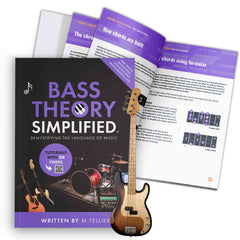
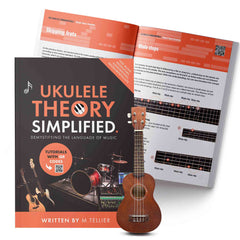
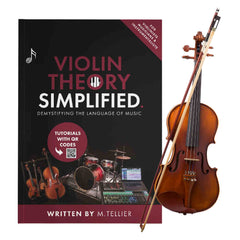
Part of the Theory Simplified series
The same method, refined across five instruments.
Built on the same visual, plain-English approach that made Music Theory Simplified (the piano edition) a hit. Each book is independent — pick the one for your instrument.
Para de adivinhar.
Começa a perceber música.
Um sistema visual feito para músicos autodidatas.